
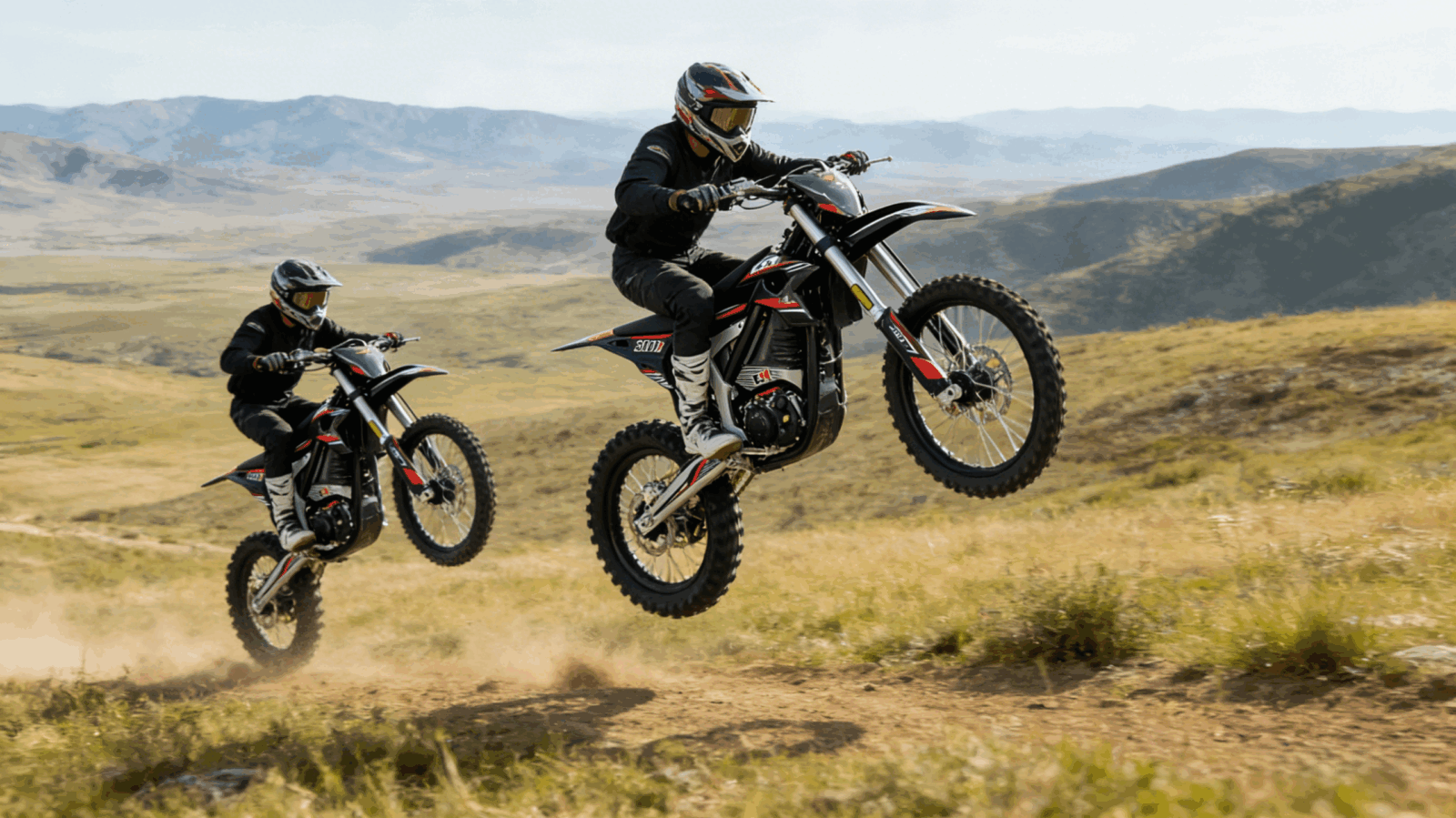
How the Silent Revolution of Electric Motorcycles Is Transforming Our Streets, Our Communities, and Our Future
There is a sound that every motorcycle enthusiast knows by heart—the deep, guttural growl of a two-stroke engine firing to life, the mechanical symphony of pistons and gears and exhaust notes that has defined motorcycling culture for over a century. It is a sound that stirs the soul, that speaks of freedom and adventure and the raw, unfiltered joy of twisting a throttle and feeling the world blur past.
But it is also a sound that has, for just as long, sparked controversy. That distinctive rumble has woken sleeping babies, rattled windows at dawn, and turned neighbor against neighbor in countless suburban disputes. The very thing that makes motorcycling thrilling has, in many ways, limited its acceptance in the modern world.
Enter the electric dirt bike—a machine that promises to change everything we thought we knew about two-wheeled transportation. This is not merely an evolution; it is a revolution. And it is happening right now, in garages and driveways and trails across the globe, as thousands of riders discover that the future of motorcycling doesn’t have to sound like the past.
The Dawn of a New Era
The electric motorcycle revolution has been building momentum for years, but recent advances in battery technology, motor efficiency, and manufacturing have pushed it from the realm of novelty into genuine practicality. What was once the domain of early adopters and environmental activists has become something far more universal: a viable, exciting, and genuinely superior alternative to traditional gasoline-powered machines.
At the heart of this transformation is the electric dirt bike—a category that perfectly encapsulates why electric powertrains represent such a fundamental shift in how we think about personal transportation. Unlike their street-focused counterparts, dirt bikes have always occupied a unique space in motorcycling culture. They are the purest expression of the sport, stripped of unnecessary weight and complexity, designed solely for the joy of riding. And it is precisely this purity that makes them such ideal candidates for electrification.
The benefits are immediate and transformative. An electric dirt bike produces virtually no noise—just the subtle whir of an electric motor and the crunch of tires on terrain. It emits no exhaust fumes, no hydrocarbons, no particulate matter that lingers in the air of residential neighborhoods. It requires no warm-up period, no choke adjustment, no delicate balancing of fuel and air mixture. You simply turn it on, and it works. Every single time.
The Sound of Silence
To understand why this matters so profoundly, we must consider the social dimension of motorcycling. For decades, the relationship between motorcyclists and their communities has been complicated by noise. The characteristic sound of a dirt bike—particularly a high-revving two-stroke—can carry for miles, penetrating walls and windows with ease. Early morning practice sessions, weekend trail rides, even simple maintenance testing in a driveway: all of these activities have the potential to generate complaints, resentment, and ultimately restrictions on where and when motorcycles can be ridden.
The electric dirt bike eliminates this conflict entirely. At typical riding speeds, the sound of tires on dirt is louder than the motor itself. Riders can practice in their backyards at dawn without disturbing a single sleeper. They can traverse noise-sensitive areas without raising eyebrows or drawing complaints. The machine becomes invisible to the ear, present only in the visual flash of a rider carving through terrain.
This silence is not merely a practical advantage—it is a philosophical statement. It represents a new kind of relationship between the motorcyclist and the world around them, one based on harmony rather than intrusion. The rider no longer imposes their presence on others through sound; they simply exist within the soundscape, as natural and unobtrusive as a cyclist or a hiker.
And yet, crucially, this silence does not diminish the experience of riding. If anything, it enhances it. Without the constant drone of engine noise, riders become more aware of their surroundings—the texture of the terrain beneath their tires, the wind rushing past, their own breathing and heartbeat. The connection between machine and rider becomes more intimate, more immediate, more pure.
Power Redefined
The skepticism that many traditional motorcyclists initially directed toward electric bikes centered on performance. How could a battery-powered machine possibly match the explosive power delivery of a gasoline engine? How could it provide the range necessary for serious riding? How could it replicate the visceral thrill that defines the dirt bike experience?
These concerns, while understandable, have proven largely unfounded. Modern electric dirt bikes deliver torque instantly and massively, from the very first rotation of the motor. There is no power band to navigate, no clutch to slip, no gears to select—just pure, linear acceleration that makes even the most potent two-strokes feel comparatively tame. The experience is not diminished; it is intensified, refined, made more accessible without being dumbed down.
The performance characteristics of electric motors align almost perfectly with the demands of dirt riding. Low-end torque—the ability to deliver massive force from a standstill—is exactly what riders need for technical terrain, steep climbs, and precise slow-speed maneuvers. The instant response of electric power eliminates the lag and unpredictability that can make gasoline engines challenging to control in difficult conditions.
Range, too, has evolved from a significant limitation into a manageable consideration. Modern battery packs provide sufficient energy for hours of aggressive trail riding, and charging infrastructure—while still developing—has become far more accessible than in the early days of electrification. For the typical rider, whose sessions last a few hours rather than entire days, range anxiety has largely disappeared as a practical concern.
Perhaps most importantly, the maintenance advantages of electric powertrains are transformative for the average rider. There are no oil changes, no air filters to clean, no spark plugs to replace, no valves to adjust. The simplicity of the electric drivetrain means that riders spend less time wrenching and more time riding—a proposition that appeals to enthusiasts and casual users alike.
Democratizing the Sport
The accessibility of electric dirt bikes extends far beyond maintenance simplicity. These machines are opening motorcycling to demographics that have traditionally been excluded or intimidated by the complexity of gasoline-powered bikes.
Young riders, in particular, benefit enormously from the approachability of electric machines. Parents can purchase electric dirt bikes for children without worrying about the mechanical sophistication required to keep them running. The elimination of hot exhaust components and flammable fuel reduces safety concerns. The quiet operation means that young riders can practice and develop skills without generating neighborhood conflicts that might otherwise limit their opportunities.
Adult newcomers, too, find electric bikes less intimidating. The absence of clutch operation and gear selection removes two of the most challenging skills for novice riders to master. The predictable, linear power delivery builds confidence rather than testing it. The clean, simple operation allows riders to focus entirely on the fundamentals of balance, body position, and line selection.
This democratization matters because motorcycling, despite its universal appeal, has faced significant barriers to entry in recent decades. The complexity of modern gasoline engines, the environmental concerns surrounding two-stroke technology, the noise restrictions in increasingly dense residential areas—all of these factors have conspired to make traditional dirt biking a niche pursuit rather than a mainstream activity.
Electric technology removes these barriers. It invites participation rather than demanding expertise. It welcomes newcomers rather than testing their commitment. In doing so, it expands the community of riders and ensures that the joy of dirt biking will be experienced by generations to come.
Environmental Harmony
The environmental credentials of electric dirt bikes extend well beyond the obvious elimination of exhaust emissions. When considered holistically, these machines represent a fundamentally more sustainable approach to recreational motorcycling.
The manufacturing process for electric powertrains, while not without environmental impact, avoids the extraction and refining of petroleum products that underpin gasoline engine production. The operational efficiency of electric motors—typically three to four times more efficient than internal combustion engines—means that less energy is required to achieve equivalent performance. As electrical grids increasingly incorporate renewable energy sources, the carbon footprint of charging electric bikes continues to decline.
But the environmental benefits that matter most to most riders are immediate and local. The elimination of exhaust fumes means that riders can enjoy trails without polluting the air they breathe. The absence of fuel spills and oil leaks means that sensitive ecosystems remain undisturbed. The quiet operation means that wildlife is not displaced by mechanical intrusion.
These qualities make electric dirt bikes particularly well-suited to the future of land access and trail management. As public lands face increasing pressure from recreational users, and as environmental concerns influence policy decisions about where motorized vehicles may operate, the clean, quiet profile of electric machines becomes a significant advantage. Riders of electric bikes become ambassadors for responsible recreation, demonstrating that motorized enjoyment need not conflict with environmental stewardship.
The Community Transformed
Perhaps the most profound impact of the electric dirt bike revolution is its effect on riding communities and culture. The traditional image of dirt biking—loud, disruptive, occasionally antagonistic toward non-riders—is being replaced by something more inclusive, more neighborly, more sustainable.
Riders of electric bikes report dramatically different interactions with their communities. Neighbors who might have complained about gasoline-powered machines express curiosity and enthusiasm about the silent newcomers. Landowners who previously prohibited motorized access reconsider when presented with clean, quiet alternatives. Local governments that have restricted dirt bike operation through noise ordinances find that electric machines fall comfortably within acceptable parameters.
This shift in perception has practical consequences for the sport. Riding areas that have been lost to development or restriction can potentially be reclaimed for electric use. New areas, previously off-limits due to noise or environmental concerns, may become accessible. The total available terrain for dirt bike recreation expands as the profile of the machines becomes more compatible with shared use.
Within the riding community itself, the electric revolution is fostering new forms of social connection. Group rides no longer require shouting over engine noise or arranging elaborate hand signals. Conversation flows naturally at stops and on easy sections of trail. The sensory isolation that gasoline engines impose is replaced by genuine social interaction.
The technology is also enabling new forms of riding experience. Night riding, once limited by noise concerns and the difficulty of managing gasoline engines in darkness, becomes a serene and accessible activity. Urban exploration, previously impractical due to noise restrictions and pollution concerns, opens new frontiers for adventure. The electric dirt bike is not merely replacing its gasoline predecessor; it is expanding the possibilities of what dirt biking can be.
The Technology Matures
The rapid evolution of electric dirt bike technology deserves particular attention, because it illustrates the broader trajectory of green transportation. What was experimental and expensive five years ago has become practical and increasingly affordable today. The pace of improvement shows no signs of slowing.
Battery technology continues to advance along multiple dimensions. Energy density—the amount of power that can be stored in a given volume and weight—increases steadily, extending range without adding bulk. Charging speeds improve, reducing the downtime between sessions. Battery longevity extends, with modern packs designed to maintain performance through thousands of charge cycles. The cost of these advanced batteries declines as manufacturing scales and technologies mature.
Motor technology, too, evolves rapidly. Power densities increase, allowing smaller, lighter motors to deliver greater performance. Thermal management improves, ensuring consistent output even under demanding conditions. Control systems become more sophisticated, enabling riders to customize power delivery to match their preferences and skill levels.
The integration of these components—the battery, the motor, the electronics, the chassis—has become an art form in itself. Leading manufacturers are producing machines that handle with precision, absorb terrain with sophistication, and inspire confidence through their predictable, responsive behavior. The gap between electric and gasoline performance, once significant, has narrowed to the point of irrelevance for most applications.
Economic Considerations
The economics of electric dirt bike ownership increasingly favor the new technology. While purchase prices for premium electric machines may still exceed their gasoline equivalents, the total cost of ownership tells a different story.
Fuel costs are dramatically lower. Electricity, even at residential rates, provides the equivalent range for a fraction of the cost of gasoline. Maintenance costs are reduced by the elimination of routine service requirements—no oil changes, no filter replacements, no valve adjustments, no top-end rebuilds. The simplicity of the electric drivetrain means that fewer things can go wrong, and when they do, repairs are often simpler and less expensive.
Resale values for quality electric dirt bikes have proven surprisingly strong, reflecting both the durability of modern battery technology and the growing demand for clean, quiet machines. As the technology becomes more established and trusted, the depreciation curves that affected early electric vehicles are flattening.
For commercial applications—rental fleets, riding schools, tour operators—the economic advantages of electric machines are even more pronounced. The reduced maintenance requirements and fuel costs accumulate rapidly across multiple machines and intensive use patterns. The elimination of noise complaints preserves relationships with neighbors and regulators. The accessibility of electric bikes expands the potential customer base to include those intimidated by gasoline machines.
The Riding Experience
All of these practical considerations, while important, ultimately serve a single purpose: to enable and enhance the experience of riding. And it is here, in the subjective realm of joy and excitement and connection, that electric dirt bikes truly prove their worth.
The experience begins with preparation. There is no fuel to mix, no choke to set, no Kickstarter to wrestle with. The machine waits silently, ready at the press of a button. This instant readiness removes a psychological barrier between the intention to ride and the act itself. Spontaneous sessions become more feasible; the friction of preparation is minimized.
On the trail, the electric bike reveals its character gradually. The initial impression is often one of strangeness—the absence of familiar sounds, the unfamiliar smoothness of power delivery. But this strangeness quickly gives way to appreciation. The rider discovers that they can hear their tires, that they can sense traction limits more precisely, that they can communicate with riding companions without shouting.
The power delivery, once adapted to, becomes addictive. The instant response to throttle input allows techniques that are difficult or impossible on gasoline machines. Wheelies and jumps become more controllable. Technical climbs become more achievable. The machine becomes an extension of intention rather than a mechanical device to be managed.
Perhaps most significantly, the electric bike enables longer, more focused sessions. Without the vibration and noise fatigue that gasoline engines impose, riders report less physical exhaustion and more mental engagement. The flow state—that magical condition where rider and machine and terrain become one—becomes more accessible and more sustained.
Looking Forward
The electric dirt bike revolution is not a distant future possibility; it is happening now, all around us, in ways both obvious and subtle. Every rider who converts to electric power becomes an ambassador for the technology, demonstrating through their example that sustainable transportation need not compromise on excitement or capability.
The trajectory is clear and accelerating. Battery technology will continue to improve, extending range and reducing weight. Charging infrastructure will become more ubiquitous, eliminating the practical constraints that still affect some users. Costs will decline as manufacturing scales, bringing electric performance within reach of broader economic demographics.
Perhaps most importantly, cultural acceptance will continue to grow. As electric dirt bikes become familiar rather than novel, as their advantages become understood rather than debated, the social license for motorcycling will expand. The sport will become more inclusive, more diverse, more integrated with the communities in which it takes place.
This is the promise of the electric dirt bike: not merely a cleaner, quieter alternative to what came before, but a fundamentally better way to experience the joy of two-wheeled adventure. It is a machine that your neighbors won’t hate—and that you will absolutely love.
The revolution is here. It is silent. It is clean. It is thrilling beyond measure. And it is waiting for you to twist the throttle and discover what comes next.
The future of motorcycling is electric. The future of motorcycling is now.
