There was a time when adventure meant loading up a gas-guzzling truck, hitching a trailer, and driving two hours to the nearest trailhead. That time is fading fast. In 2026, a new breed of rider is rewriting the playbook. They are commuting through downtown traffic on Tuesday, carving singletrack through a pine forest on Saturday, and doing it all on the same machine—an EEC-certified electric off-road motorcycle.
If that sounds like a dream, it is not. It is the reality that thousands of adult riders are already living. This guide is for anyone who has ever looked at their garage and thought, “I want one bike that does it all.” Let us walk through what makes these machines special, how to choose the right one, and how to build a lifestyle around the freedom they offer.
What Does EEC Certification Actually Mean?
Let us start with the acronym that matters most. EEC stands for European Economic Community, and in the motorcycle world, it refers to a whole-vehicle type approval system. When a bike carries an EEC certification and comes with a Certificate of Conformity (COC), it means the manufacturer has proven to European regulators that the motorcycle meets strict standards for safety, lighting, braking, noise, and electromagnetic compatibility.
Think of the COC as the bike’s passport. With it, you can register the motorcycle in almost any EU member state without jumping through extra hoops. You get a legal license plate, proper insurance, and the green light to ride on public roads. That is a big deal, because most traditional dirt bikes are sold as off-road-only machines. They lack headlights, turn signals, mirrors, and street-legal tires. An EEC-certified electric off-road motorcycle bridges that gap. It is born dual-purpose.
The Stark VARG EX, for example, is fully homologated for road use across Europe, Australia, New Zealand, the United States, and Canada. It ships with a COC document that streamlines registration, plus road-legal lighting integrated right into the bodywork. In many European countries, you can even ride it with a standard car license. That is the kind of flexibility that changes how you think about motorcycling.
For Europe specifically, EEC or E-type approval confirms that a vehicle meets required standards for safety, emissions, lighting, braking, mirrors, tires, reflectors, and noise. This framework ensures a consistent standard of quality across the continent. Instead of separate national approvals, a bike with a COC is recognized EU-wide, making cross-border riding and relocation remarkably simple. For importers and buyers, the safest approach is to confirm the model code, technical specification, certificate scope, and destination country before purchase.
Why Go Electric?
The electric revolution is not just about saving the planet, though that is a nice bonus. It is about transforming the riding experience itself.
First, there is the torque. Electric motors deliver maximum twisting force the instant you twist the throttle. There is no waiting for a piston to climb through the rev range, no clutch slip, no missed shifts. On a technical trail, that instant response lets you loft the front wheel over a root or power out of a muddy rut with surgical precision. On the street, it means you can merge into traffic confidently without hunting for the right gear.
Second, there is the silence. Ride an electric off-road motorcycle into the wilderness and you will hear birdsong, rushing water, and the crunch of your own tires—not the drone of a two-stroke engine. Many trail systems that ban gas bikes welcome electrics with open arms. That opens up riding areas you might never have considered before.
Third, there is the maintenance. Or rather, the lack of it. No oil changes. No air filters to clean. No valves to adjust. No spark plugs to foul. The Stark VARG, for instance, is designed to be maintained “as effortlessly as servicing a bicycle.” Keep the chain lubed, the brakes checked, and the tires inflated. That is about it. Over a hundred hours of riding, the cost difference compared to a gas-powered equivalent can be staggering.
Finally, there is the versatility. Many EEC-certified electric models offer multiple ride modes. You can dial the power down for a relaxed cruise through the city, then unlock full beast mode when the pavement ends. Some bikes even let you set a PIN-locked power limit, which is perfect if you want to lend the bike to a friend or family member without handing over all 80 horsepower.
Battery technology has also reached a tipping point. Modern lithium battery packs, like those from CATL found in many 2026 models, offer impressive energy density and fast charging capabilities. A typical 72V 60Ah battery can deliver up to 150 kilometers of range under mixed conditions, and removable packs mean you can swap a dead battery for a fresh one in minutes rather than waiting hours for a recharge. The ECE R136 standard specifically addresses battery safety for electric motorcycles, covering thermal runaway protection, overcharging prevention, and impact resistance—giving riders confidence that their power pack has undergone rigorous testing.
Choosing Your Machine
The market in 2026 is more crowded than ever, which is great news for buyers. Here is how to think through your options.
If you want a full-size experience that can handle professional-grade motocross tracks and technical enduro trails, look at the Stark VARG EX. It is the flagship of the segment, with a 21-inch front wheel, 18-inch rear, long-travel KYB suspension, and Brembo brakes. It is fully road-legal and homologated across major markets. The detachable Arkenstone dashboard doubles as an Android device, giving you GPS, trail recording, and power adjustments in one rugged package. The VARG EX requires an A1 driving license in Europe, though in many countries a standard category B car license suffices, making it accessible to a broad range of riders.
If you are looking for something lighter and more affordable, the Sur-Ron Light Bee X has become the darling of the trail community. It weighs just over 100 pounds, tops out around 47 mph, and costs well under five thousand dollars. The owner community is enormous, which means aftermarket parts, battery upgrades, and riding tips are everywhere. Do note that the standard Light Bee X is off-road only, but Sur-Ron also offers an L1E version that is homologated for European roads with EEC approval. That L1E variant is classified as a moped and fully compliant with EEC whole vehicle type approval, allowing legal road use with proper registration, license, and insurance.
For riders who want a middle ground, the midsize category is exploding in 2026. Bikes like the Dust Moto Hightail and the Kayo eC2i offer full-size wheels and real dirt-bike ergonomics at a more accessible price point than the Stark. The Tork Pro Sport brings a race-focused pedigree with quick-release batteries and easy controller access. The ReRode R1 Plus refines the formula with updated plastics and a more settled riding position. The Zero XB, producing about 7.5 kW, offers a nimble and lightweight entry-level option that feels similar to the Sur-Ron Light Bee in terms of power delivery and handling.
When shopping, always verify two things: does the specific model have EEC/COC paperwork, and does it match the configuration you intend to ride? A bike with knobby off-road tires may not pass a street inspection even if the frame is certified. Similarly, some export versions have different ECU maps or battery capacities than their domestic counterparts. Ask the dealer for the COC document before you buy. A common mistake is assuming that a similar model is automatically covered. In reality, changes to the engine, ECU, exhaust, tire size, braking system, lighting system, or vehicle category may affect approval validity.
The Urban Side of the Equation
Here is where the lifestyle shift really happens. An EEC-certified electric off-road motorcycle is not a toy you trailer to the desert twice a year. It is a legitimate daily vehicle.
Picture your Tuesday morning. Instead of sitting in bumper-to-bumper traffic, you filter through the lanes on a bike that is narrow enough to slip between cars but powerful enough to keep up at highway speeds. You pull into your office parking spot—no hunting for a space, no feeding a meter. At lunch, you plug the bike into a standard outlet in the garage. By five o’clock, the battery is full again.
Electric bikes thrive in the city. There is no warm-up period. No stalling at red lights. No vibration numbing your hands during a twenty-minute commute. The instant torque makes darting through intersections feel effortless. And because these bikes are so quiet, you are not “that guy” revving his engine at 6 a.m.
Insurance and registration are straightforward with an EEC-certified model. In Europe, many countries classify these bikes as L1 or L3 vehicles, which often means lower registration fees and simplified licensing compared to large-displacement gas motorcycles. In some regions, a standard car license is all you need. Always check your local authority, but the trend is toward accessibility, not restriction.
The Can-Am Origin, another dual-sport electric entry for 2026, offers six adaptive drive modes including Normal, ECO, Rain, Sport, Off-Road, and Off-Road+, allowing you to tailor the bike’s performance to whatever the day throws at you. Its anti-lock braking system and motorcycle traction control work together to enhance stability, even on slippery urban surfaces. Starting at around $10,999, it represents a compelling option for riders who want factory-built refinement.
The Wilderness Awaits
Now picture your Saturday. You wake up, check the Varg app for weather and trail conditions, and load a GPS route onto the Arkenstone. You ride out of your driveway, legally, on paved roads, until the asphalt turns to gravel and the gravel turns to dirt. You do not need a truck. You do not need a trailer. You do not need to coordinate with three friends who own pickups. You just ride.
That seamless transition is the magic of a true dual-sport electric motorcycle. The same headlights that kept you visible to commuters now illuminate a forest tunnel. The same mirrors that helped you lane-split are folded in so they do not snag on branches. The same turn signals that blinked at intersections are now tucked away, irrelevant, as you focus on the trail ahead.
Range anxiety is the question everyone asks, and the answer in 2026 is: it depends, but it is rarely a problem. A Stark VARG EX can cover serious distance on a charge, especially if you are mixing street and trail riding. The Sur-Ron Light Bee X claims around 75 miles of range under mixed conditions. Many bikes now feature removable battery packs, so you can carry a spare in a backpack or leave one charging at base camp. Charging from a standard outlet takes three to four hours for most models—perfect for a lunch break or an overnight stay.
And then there is the access. Because electric bikes are so quiet, land managers in many regions are more willing to allow them on multi-use trails where gas bikes are banned. National parks, nature reserves, and private estates are increasingly opening their gates to electrics. You are not just riding trails; you are riding trails that gas bikes cannot touch.
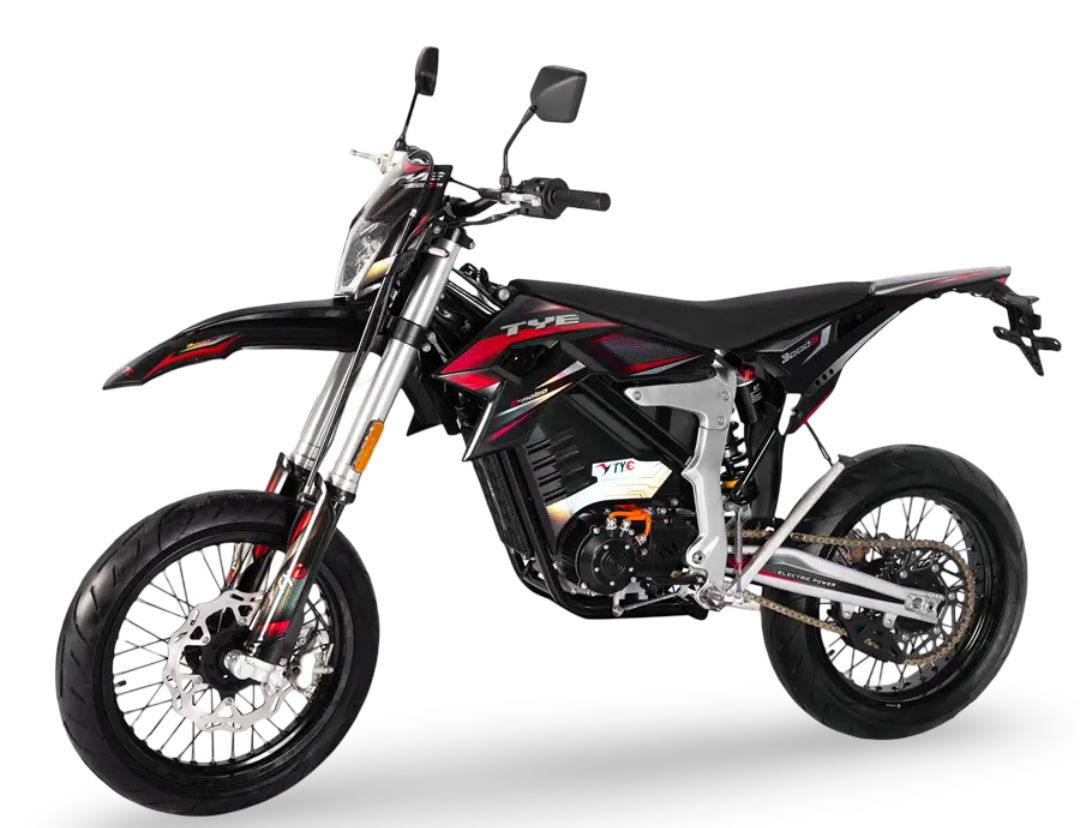
The TYE3000, an EEC-certified enduro model, demonstrates how far the segment has come. With a 72V system, peak power around 12 kW, and a top speed of 125 km/h, it offers genuine dual-sport capability. Its four-speed gearbox and reverse gear add versatility that pure single-speed electrics cannot match. The removable CATL lithium battery pack and hydraulic disc brakes round out a package that is as comfortable on a mountain pass as it is on a city boulevard.
Building Your Lifestyle
Owning an EEC-certified electric off-road motorcycle is not about having a cool toy. It is about redesigning your week around adventure.
Start by mapping your local terrain. Apps like Trailforks, Gaia GPS, and the Varg app itself can show you legal off-road routes within riding distance of your home. You might be surprised how much green space exists within a thirty-mile radius of downtown.
Invest in gear that works for both worlds. A dual-sport helmet with a peak visor protects you from sun and branches on the trail while remaining aerodynamic enough for the highway. Armored jackets with ventilation panels keep you cool in summer traffic and protected during a low-speed dirt spill. Adventure-style boots that you can actually walk in are worth their weight in gold when you need to push the bike through a muddy section.
Join the community. Electric off-road riding has one of the most welcoming cultures in motorcycling. Online forums, local Facebook groups, and organized group rides are full of people who will share charging locations, trail conditions, and maintenance tips. The Sur-Ron community, in particular, is famous for its DIY spirit—owners swap batteries, upgrade controllers, and help newcomers troubleshoot issues over a beer.
Think about charging infrastructure creatively. You do not need a dedicated Level 2 charger in your garage. A standard 110V or 220V outlet is enough for overnight charging. On longer trips, campgrounds, RV parks, and even friendly cafes will often let you plug in for the price of a coffee. Some riders carry a compact portable charger in a backpack, turning any available outlet into a refueling station.
Safety should always come first. Always wear a suitable helmet, eye protection, and protective clothing. EEC-certified helmets meet rigorous impact standards, and full-face designs are strongly recommended for speeds above 30 mph. Check your chain tension and lubrication regularly, inspect nut and bolt torque levels, and maintain proper tire pressures. Before disconnecting the battery, always switch off the master fuse switch. Never use a high-pressure washer to clean your machine; a gentle low-pressure hose with a cloth or brush is the way to go.
The Bigger Picture
There is something deeply satisfying about simplifying your life down to one machine that does everything well. No more garage full of specialized vehicles. No more weekends wasted loading and unloading trailers. No more guilt about the environmental impact of your hobby.
An EEC-certified electric off-road motorcycle represents a convergence of technology, regulation, and culture that was unimaginable a decade ago. It is street-legal, trail-capable, low-maintenance, and increasingly affordable. It lets you commute on Monday and explore on Sunday without changing bikes.
The future of motorcycling is not about bigger engines or louder exhausts. It is about smarter machines that fit into your life instead of dominating it. It is about riding out your front door and not stopping until the trail ends. It is about hearing the wind instead of the engine. It is about the freedom to go anywhere, anytime, on a single machine that is as happy on asphalt as it is on dirt.
So if you have been waiting for the right moment to jump into electric off-road riding, 2026 is that moment. The bikes are here. The trails are open. The technology is proven. The community is growing. The infrastructure is improving. The only question that remains is the simplest one of all: where will you ride first?
