
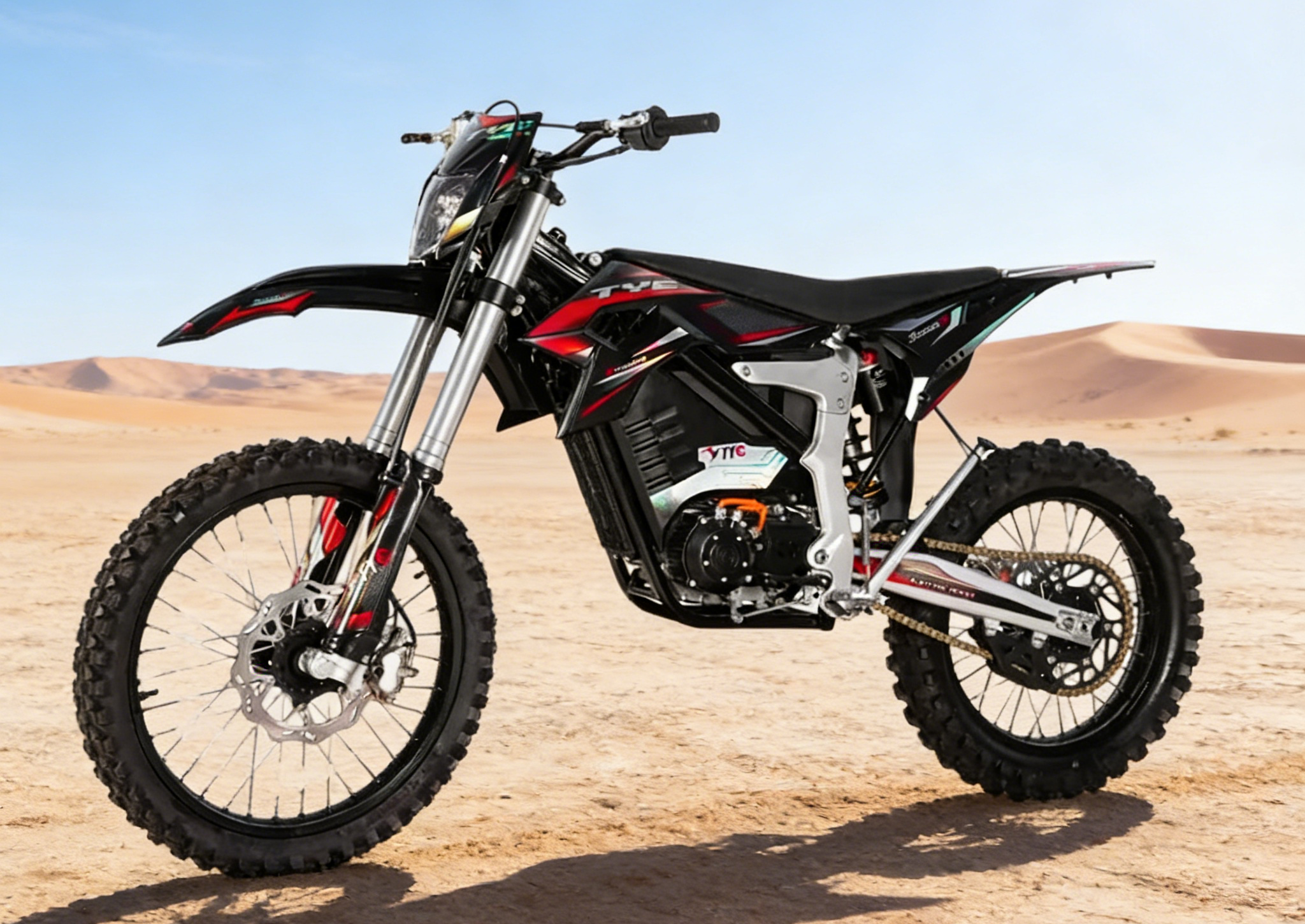
The Global Surge: Electric Off Road Motorcycles Take Over Europe, America, and Asia
The electric off road motorcycle revolution has swept across continents with remarkable speed, transforming what was once a niche curiosity into a mainstream force reshaping the motorcycling landscape. In North America, the market has matured into a diverse ecosystem where both domestic pioneers like Zero Motorcycles and international powerhouses such as KTM compete alongside emerging Chinese manufacturers, creating unprecedented consumer choice . California’s progressive environmental mandates have accelerated this transition, compelling OEMs to prioritize zero-emission offerings while expanding state off-highway vehicle parks partially offsets trail access losses .
Europe presents a similarly dynamic picture. Stricter Euro 5 tailpipe regulations and noise caps are pushing manufacturers toward smaller displacement and electric powertrains across enduro, dual-sport, and adventure categories . The continent’s rugged alpine terrain and FIM-sanctioned race calendars provide natural proving grounds, though fragmented national subsidies create uneven adoption rates across borders. Despite regulatory complexity, European riders increasingly embrace electric machines for their instant torque delivery and reduced environmental footprint.
Asia-Pacific stands as the fastest-expanding region globally, commanding 54% of total electric motorcycle demand with a projected 6.81% CAGR through 2031 . China leads through massive battery-swap networks supporting day-trip usage without home charging, while India combines rising incomes with aggressive policy subsidies . Southeast Asian nations including Indonesia and Thailand are developing tourism-oriented trail clusters, leveraging local assembly incentives to build indigenous capabilities . Chinese manufacturers have particularly excelled at improving battery technology, increasing range and reducing charging times while integrating smart features and connectivity .
The high-performance electric motorcycle segment exemplifies this global momentum. Over 42% of global electric motorcycles now qualify as high-performance models, with 61% integrating battery capacities exceeding 8 kWh and 33% offering top speeds above 160 km/h . More than 48% of manufacturers have introduced smart connectivity features, while 27% focus on advanced regenerative braking systems . In the United States alone, 52% of riders are millennials aged 25–40, with 45% prioritizing motorcycles capable of accelerating 0–100 km/h in under 4 seconds .
What is an Electric Off Road Motorcycle?
An electric off road motorcycle is a two-wheeled vehicle specifically engineered for unpaved terrains including dirt, mud, sand, and rocky trails, powered by an electric motor and rechargeable battery pack rather than a gasoline-burning internal combustion engine . These machines represent a fundamental departure from traditional motorcycling philosophy, replacing the mechanical complexity of pistons, valves, and exhaust systems with elegant electrical architecture.
The core components define both capability and character. The battery pack serves as the energy reservoir, with lithium-ion chemistry dominating due to high energy density, extended cycle life, and favorable weight characteristics . Capacity directly determines range, with larger packs enabling longer adventures between charges. The electric motor transforms electrical energy into mechanical propulsion, offering the signature instant torque that distinguishes electric riding . Robust suspension systems—front forks and rear shock absorbers—handle the impacts and articulation demands of technical terrain, while lightweight yet strong frames constructed from aluminum or high-strength steel provide structural integrity under extreme stress .
Modern electric off road motorcycles increasingly function as sophisticated digital platforms. GPS navigation, ride tracking, performance analytics, and remote diagnostics integrate seamlessly into the riding experience, enhancing both enjoyment and practical utility . This technological convergence positions electric machines at the intersection of motorsport and information technology, appealing to digitally native generations.
Why Electric Off Road Motorcycles Are Conquering Global Markets
Environmental Imperatives and Regulatory Pressure
The integration of smart technology and connectivity represents merely one dimension of electric off road motorcycle evolution . More fundamentally, increasing environmental regulations and heightened global sustainability awareness are reshaping market dynamics. Governments worldwide impose stricter emission standards while promoting eco-friendly transportation alternatives, making electric off road motorcycles compelling zero-emission solutions for recreational activities . This regulatory pressure transcends compliance—it resonates with consumers who prioritize environmentally responsible choices as expressions of personal values.
Performance Superiority
Advancement in motor technology and drivetrain efficiency continues driving core performance improvements . Manufacturers develop more powerful, compact, and efficient electric motors delivering instant torque and superior acceleration, frequently outperforming internal combustion counterparts in specific off-road scenarios . Electric engines reach peak power and torque instantly at 0 RPM, whereas internal combustion engines must spin up through their RPM range to achieve maximum output . This fundamental physical difference transforms real-world riding, enabling explosive corner exits, effortless hill climbs, and precise technical control.
The performance gap manifests dramatically in acceleration metrics. Leading electric motorcycles achieve 0-60 mph in under 2.7 seconds, with instant torque proving decisive in emergency situations requiring rapid evasion . For off-road applications, this responsiveness translates to enhanced safety and capability across challenging terrain.
Economic Rationality
Operating costs for electric motorcycles run substantially lower than gasoline alternatives. Electricity costs less than gasoline, while reduced maintenance requirements—eliminating oil changes, air filter replacements, spark plug service, and valve adjustments—typically save riders over $1,000 annually . The simplified mechanical architecture, with fewer moving parts and no complex transmission in many designs, minimizes both scheduled maintenance and unexpected failures.
Acoustic Advantages
Electric motors operate dramatically quieter than gasoline engines, providing more peaceful riding experiences while reducing noise pollution in natural areas . This acoustic signature proves particularly valuable where noise restrictions apply or when riders seek outdoor tranquility without wildlife disturbance . The silence transforms trail access dynamics, enabling riding in noise-sensitive locations previously closed to motorized recreation.
Electric vs. Gas: The Off-Road Advantage Matrix
| Comparison Dimension | Electric Off Road Motorcycle | Gasoline Off Road Motorcycle |
|---|---|---|
| Torque Delivery | Instant maximum torque from 0 RPM; no power band to manage | Torque builds progressively with RPM; requires clutch modulation and gear selection |
| Maintenance | Minimal: no oil, filters, coolant, or valve service; fewer moving parts | Extensive: regular oil changes, air filters, spark plugs, valve adjustments, exhaust maintenance |
| Operating Cost | Lower: cheaper electricity, minimal maintenance, reduced consumables | Higher: gasoline purchases, frequent maintenance, replacement parts |
| Environmental Impact | Zero direct emissions; cleaner with renewable electricity | CO₂, NOx, and particulate emissions; noise pollution |
| Trail Access | Expanded: silent operation enables access to noise-restricted areas | Limited: noise triggers trail closures and land-use conflicts |
| Riding Experience | Smooth, vibration-free, predictable power; focus on terrain | Engine vibration, exhaust character, mechanical engagement; sensory-rich but demanding |
| Initial Acquisition | Generally higher purchase price; offset by incentives in some regions | Lower entry cost; higher lifetime ownership expense |
| Range/Refueling | 100-300 km typical; 30-minute fast charging or hours for full charge | 300-500 km typical; minutes to refuel at ubiquitous stations |
| Technology Integration | Native: AI safety systems, connectivity, over-the-air updates | Aftermarket add-ons; limited integration capability |
TYEMOTOR: Engineering the Electric Off-Road Future
TYEMOTOR exemplifies how Chinese manufacturing excellence converges with electric innovation to produce world-class off-road machines. The company’s development trajectory mirrors broader industry patterns—focusing on battery technology advancement, range extension, charging time reduction, and smart feature integration .
The TYEMOTOR approach emphasizes practical performance optimization rather than specification chasing. Their machines deliver the instant torque characteristics that define electric off-road riding while maintaining the rugged reliability demanded by remote trail exploration. Smart connectivity features allow riders to monitor battery status, optimize power delivery, and track performance metrics through integrated digital platforms .
For markets like Brazil, TYEMOTOR’s value engineering presents particular relevance. The company’s ability to deliver capable electric off-road performance at accessible price points addresses the economic constraints that limit premium European and American model adoption in emerging markets.
Common Classifications of Electric Off Road Motorcycles
By Riding Discipline
Electric Motocross Bikes: Purpose-built for closed-course competition, featuring maximum power output, minimal weight, and suspension optimized for jump landing and berm carving. These machines prioritize acceleration and agility over range, typically offering 30-60 minutes of intense riding per charge.
Electric Enduro Bikes: Designed for varied terrain endurance, balancing power with extended range capability. Enduro electric motorcycles incorporate larger battery packs, more comfortable ergonomics for standing riding positions, and versatile suspension tuning. The growth of specialized segments within the off-road electric motorcycle market includes purpose-built enduro machines catering to unique rider demands .
Electric Trail Bikes: Focused on accessibility and versatility for recreational riders. Lower power outputs, forgiving handling characteristics, and reduced seat heights welcome newcomers while still delivering authentic off-road capability .
Electric Trials Bikes: Ultra-lightweight machines emphasizing low-speed balance and precision. Minimal seat designs, extremely low weight, and precisely modulated torque enable technical obstacle negotiation without momentum.
By Performance Tier
Entry-Level (5-10 kW peak): Appropriate for beginners, younger riders, and casual trail exploration. Manageable power delivery builds skills without intimidation.
Mid-Performance (10-20 kW peak): Versatile machines matching 250-450cc gasoline equivalents. Suitable for serious trail riding, amateur competition, and multi-terrain adventure.
High-Performance (20+ kW peak): Professional-grade machines competing with top-tier motocross and enduro motorcycles. Extreme acceleration, advanced suspension, and premium components justify premium pricing.
By Age and Size Classification
Youth electric dirt bikes introduce children to off-road riding with appropriately scaled power and dimensions. Adult machines accommodate full-sized riders with ergonomic proportions and performance capabilities matching professional demands. The progression from youth to adult electric off-road motorcycles parallels skill development while maintaining environmental and operational advantages across all sizes.
Selecting Your Electric Off Road Motorcycle: Critical Considerations
Motor Power and Torque Characteristics
Evaluate both nominal (continuous) and peak power ratings. Nominal power indicates sustainable output for extended riding, while peak power determines maximum acceleration and climbing capability. For technical Brazilian terrain featuring steep ascents and challenging obstacles, robust peak torque proves essential.
Battery Capacity and Range Reality
Manufacturer range claims require skeptical interpretation. Real-world range varies dramatically based on terrain difficulty, rider weight, throttle aggression, and ambient temperature. For Brazilian trail networks where charging infrastructure remains sparse, conservative range estimation prevents unfortunate strandings. Consider whether removable battery systems enable extended riding through spare pack carriage.
Suspension Quality and Adjustability
Off-road demands exceed street riding suspension requirements substantially. Evaluate travel distance, damping adjustability, and spring rate appropriateness for intended terrain. Hydraulic front and rear systems with compression and rebound tuning enable optimization for varying conditions from rocky technical sections to high-speed desert runs.
Charging Infrastructure Compatibility
Assess charging time requirements against available infrastructure. Standard home charging may require 6-8 hours for full replenishment, while fast-charging capability reduces this to 2-3 hours where supported . For Brazilian adventure riding, understanding charging access along intended routes proves as critical as range itself.
Weight and Ergonomics
Battery weight impacts handling characteristics significantly. Centralized, low-mounted battery packs preserve nimble maneuverability. Test ride ergonomics for standing position comfort, seat-to-peg relationships, and handlebar reach during technical riding.
Build Quality and Component Durability
Brazilian trail conditions—frequent water crossings, abrasive dust, and extreme temperature variations—demand robust construction. Examine frame materials, sealing against environmental intrusion, and component specifications from reputable suppliers.
After-Sales Support and Parts Availability
Given Brazil’s import complexity and customs challenges, prioritize manufacturers with established local representation or straightforward parts logistics. Maintenance simplicity—an inherent electric advantage—becomes crucial when specialized technician access proves limited.
South American Horizon: Brazil, Chile, and Argentina
Brazil: Continental Leader with Structural Advantages
Brazil stands positioned to lead Latin American electric off-road adoption, leveraging unique structural advantages. The nation’s motorcycle market ranks among the world’s largest, with approximately 2.2 million annual unit sales creating substantial addressable demand. Critically, Brazil’s electricity generation derives approximately 90% from renewable sources—primarily hydroelectric with growing solar and wind contributions—providing genuinely clean mobility infrastructure that fossil-fuel-dependent nations cannot replicate.
The federal “Mover” program, introduced in 2024, establishes tax incentives and fiscal support for electric vehicles and charging infrastructure . Complementary state-level initiatives in Rio de Janeiro, São Paulo, and Minas Gerais offer IPVA tax exemptions, preferential electricity tariffs, and urban access benefits. These policy frameworks, while currently emphasizing urban mobility, provide templates for off-road application extension.
Brazil’s diverse topography—from Amazon rainforest trails to Cerrado savanna routes, coastal dunes to southern mountain singletrack—offers extraordinary electric off-road potential. The silent operation of electric machines enables access to ecologically sensitive areas where noise restrictions prohibit gasoline motorcycles, effectively expanding ridable terrain.
However, significant barriers persist. Brazil’s strict customs policies and import tariffs inflate electric motorcycle prices beyond mass-market accessibility. Currency volatility, noted specifically in dirt bike market analyses, drives buyers toward lower-cost tiers . Domestic manufacturing concentrates on urban commuting models, leaving off-road performance machines dependent on imported solutions. Charging infrastructure remains concentrated in major metropolitan areas, with trailhead access virtually nonexistent.
The path forward requires coordinated action: customs duty restructuring for specialized recreational vehicles, charging network expansion to tourism and riding destinations, and domestic capability development through technology transfer partnerships. Brazil’s existing motorcycle industrial policy, which has established the nation as a regional production hub , provides foundational infrastructure for electric off-road manufacturing localization.
Chile: Andean Adventure Awaits Electrification
Chile presents contrasting conditions—smaller market scale but progressive policy environment and extraordinary terrain diversity. The nation’s Atacama Desert, Andean highlands, Patagonian wilderness, and central valley trail networks offer electric off-road opportunities spanning extreme aridity to glacial conditions.
Chile’s renewable energy leadership, with ambitious solar and wind deployment targets, aligns electrically with sustainable mobility. The country’s relative economic stability compared to regional peers supports premium product adoption. However, market scale limitations challenge manufacturer investment in specialized distribution and service networks.
Electric off-road motorcycles could prove transformative for Chilean ecotourism, enabling silent access to pristine wilderness areas where gasoline noise disrupts wildlife observation and visitor experience. The country’s established adventure tourism infrastructure provides ready channels for electric fleet integration.
Argentina: Economic Volatility Meets Riding Passion
Argentina embodies the tension between electric off-road potential and economic constraint. The nation possesses passionate motorcycling culture, extraordinary Patagonian and Andean terrain, and established racing traditions. However, economic volatility—specifically noted in dirt bike market analyses as driving buyers toward low-cost tiers —severely constrains premium electric motorcycle adoption.
Currency instability, inflation, and import restrictions create pricing environments where electric motorcycles’ higher initial costs become prohibitive. The existing gasoline motorcycle market leans heavily on value-oriented imports, with consumers prioritizing affordability over technological advancement .
Despite these challenges, Argentina’s long-term electric off-road prospects remain compelling. The nation’s renewable energy potential, particularly Patagonian wind resources, supports clean electricity generation. As battery costs decline globally and regional manufacturing develops, price accessibility will improve. Strategic focus on domestic assembly—mirroring Brazil’s industrial policy approach—could accelerate adoption by circumventing import cost structures.
Conclusion: Unlocking Tomorrow’s Trails
The electric off road motorcycle represents more than technological substitution—it embodies a fundamental reimagining of how humans interact with natural terrain. The global surge across Europe, America, and Asia demonstrates that this transition transcends environmental obligation, delivering genuine performance advantages that passionate riders embrace enthusiastically.
For Brazil specifically, and South America broadly, electric off-road motorcycles offer unique trail access possibilities. Silent operation opens landscapes previously closed to motorized recreation. Instant torque conquers technical challenges with unprecedented control. Reduced maintenance enables remote exploration with enhanced reliability. Renewable electricity alignment transforms riding from environmental compromise into ecological contribution.
Realizing this potential demands navigating substantial obstacles. Brazil’s customs complexity, Argentina’s economic volatility, and Chile’s market scale limitations require tailored strategies addressing regional specificities. Infrastructure investment, policy refinement, and manufacturing localization emerge as critical enablers.
The future of South American off-road motorcycling will not be silent by default—it will be silent by design, as riders, manufacturers, and policymakers collaboratively unlock new trail access through electric innovation. The power is already roaring; the question is whether institutional frameworks will amplify or muffle its potential across this magnificent continent.
