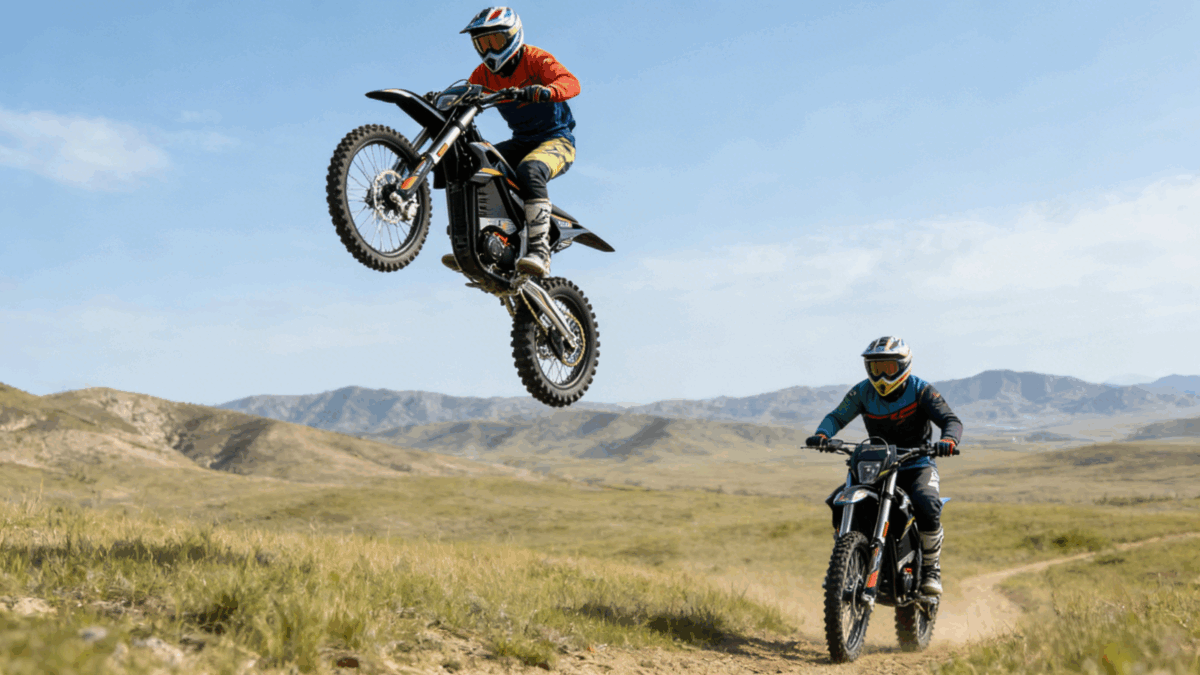
For over half a century, the identity of motocross has been forged in fire and noise. The visceral scream of a two-stroke, the guttural thump of a four-stroke, the smell of premix hanging in the air—these sensations are woven into the sport’s DNA. But a new contender has rolled up to the starting gate, and it’s challenging everything we thought we knew about off-road riding. The Electric Motocross Motorcycle, once a niche curiosity, has evolved into a genuine high-performance machine.
This is the ultimate showdown. We are pitting the reigning champion—the gas-powered motocross bike—against the silent but deadly challenger—the electric motocross bike. We’ll delve into performance, handling, cost, and the visceral experience of riding, with a special focus on how innovators like those at TYE Motor are shaping this electrifying future .
Round 1: The Heart of the Beast – Powertrain and Performance
The Gas Contender: Controlled Chaos
The gas motocross bike is a masterpiece of mechanical engineering. Its heart is a high-strung, single-cylinder internal combustion engine, usually 250cc or 450cc. This is an engine that needs to be coaxed into delivering its power. It has a “powerband”—a specific RPM range where the camshaft timing and porting align to produce a explosive surge of horsepower. To ride a gas bike fast, you must master the clutch, fan it to keep the engine in the meat of its power, and constantly shift gears to stay in that narrow window of fury. It’s a demanding, rewarding, and inherently physical process.
The Electric Challenger: The Silent Storm
The electric motocross motorcycle throws out the rulebook. It replaces the complex engine, clutch, and gearbox with a brushless DC motor, a controller, and a lithium-ion battery pack. As highlighted on the TYE Motor blog, the most significant advantage here is instant torque . Unlike a gas engine, which must build revolutions to reach peak power, an electric motor delivers 100% of its torque from 0 RPM.
Take the TYE3000 as a prime example of this new wave. It features a 12kW mid-drive motor that propels it from 0-100 km/h (0-62 mph) in just 4.8 seconds . This isn’t just a number; it’s a fundamentally different riding sensation. When you twist the throttle on a machine like this, there is no lag, no clutch slip, and no waiting for the RPMs to climb. The bike simply launches itself towards the horizon with a linear, seamless surge of power that feels like being catapulted. While a 450cc gas bike might have a higher peak horsepower number, the Electric Motocross Motorcycle often wins the battle of tractability and usable power, making it incredibly effective for explosive starts and powering out of slippery corners.
Winner: Electric for its instantly accessible, controllable, and arm-straightening torque.
Round 2: On the Track and Trail – Handling and Dynamics
Weight and Mass Centralization
This is where the debate gets interesting. Gas bikes are generally lighter, with a 250cc four-stroke tipping the scales at around 220 lbs (100 kg). However, that weight is high in the chassis, containing the engine’s reciprocating mass. In contrast, an electric bike like the TYE3000 has a curb weight of approximately 118kg (260 lbs) , which is heavier . So, advantage gas, right? Not so fast.
The key differentiator is weight distribution. The heaviest component of an electric bike is the battery, and engineers strategically place it low and centered in the frame. This results in a dramatically low center of gravity. TYE Motor describes this feeling as riding “inside the bike, rather than on top of it” .
On the trail, this translates to incredible stability and planted handling. The bike feels glued to the track through off-camber sections and resists deflecting off roots and rocks. In the air, the centralized mass makes the bike feel predictable and easy to control. While you might feel the extra pounds lifting the bike off a stand, once you’re moving, the low-slung mass makes the electric bike feel much nimbler than its weight suggests.
Suspension Showdown
Top-tier gas bikes come with highly sophisticated suspension, and the electric challengers are following suit. The TYE3000 is equipped with a custom-made inverted front fork utilizing MNT WP technology and a progressive damping rear shock . This level of equipment ensures that despite the added weight, the bike can absorb huge jumps and square-edged bumps effectively, keeping the rider in control.
Winner: Tie. Gas for flickable lightness, Electric for a confidence-inspiring, planted feel due to the low center of gravity.
Round 3: The Sound of Silence vs. The Scream of the Machine
This is perhaps the most emotionally charged aspect of the showdown.
The Gas Experience: Visceral Feedback
For many, motocross is the sound. The engine provides a constant auditory tachometer. You shift by the pitch of the scream; you know you’re on the pipe by the signature wail. It’s a sensory overload that pumps adrenaline and signals danger and excitement to everyone within a mile radius. This sound is a core part of the culture and ritual.
The Electric Experience: The Stealth Advantage
Climbing onto a high-performance electric bike for the first time is an eerie experience. As TYE Motor puts it, “the silence is, frankly, bizarre at first” . You hear the whir of the motor, the chain slapping the guide, and the tires clawing for traction—sounds normally drowned out by the combustion roar.
This silence, however, is a superpower. It reduces rider fatigue on long days, allowing for heightened concentration. More importantly, it’s a key to unlocking new riding areas. As land access shrinks due to noise complaints, the electric bike becomes a “good neighbor.” You can ride earlier or later without disturbing anyone, and you can access trails that might have noise restrictions . The downside is safety; on multi-use trails, you are effectively invisible, and the lack of engine braking requires you to rely more on your physical brakes.
Winner: Emotional – Gas. Practical – Electric.
Round 4: Cost of Entry and Cost of Ownership
The Price of Innovation
Let’s address the elephant in the pit: the initial purchase price. Generally, an Electric Motocross Motorcycle carries a higher upfront cost than a comparable gas bike. A brand-new 250cc fuel-injected bike might retail for $8,000-$9,000, while a high-end electric model can be significantly more. However, looking at the TYE lineup, they offer compelling value. The TYE3000, with its full-size chassis and race-ready specs, is positioned at a highly competitive price point of around $3,550 for bulk orders, demonstrating that performance electric motocross is becoming more accessible .
The Long-Term Game
Where the electric bike truly wins the financial war is in operating costs. A gas bike requires a laundry list of consumables:
- Engine oil and filters (every 5-10 hours)
- Air filter cleaning and oiling (every ride)
- Valve clearance checks
- Coolant
- Spark plugs
- Top-end rebuilds (piston, rings, gaskets) every 50-100 hours.
An electric dirt bike eliminates virtually all of this. There’s no engine oil, no air filter, no spark plugs, and no valves to adjust. Maintenance is reduced to the absolute basics: cleaning and lubing the chain, checking tire pressure, and changing brake pads. The TYE3000, for instance, features a robust and reliable motor and a removable CATL lithium battery pack that is designed for longevity and can be swapped in just 60 seconds for extended riding sessions . “Fueling” is also dramatically cheaper. The cost to fully charge a battery is a fraction of the price of a tank of premium race fuel .
Winner: Electric, in a landslide. Lower maintenance and “fuel” costs offset the higher initial investment over time.
Round 5: Range and Refueling – The Endurance Factor
This is the last bastion of gas-powered dominance, and it remains a significant hurdle for electric.
The Gas Advantage: Go Anywhere, Anytime
A gas bike with a full tank (around 1.6-2 gallons) can easily handle a hard 45-minute moto or a 60+ mile trail ride. When it’s empty, you carry a one-gallon can of gas, dump it in, and you’re back in business in under two minutes. For a full day of riding at a remote track or an epic backcountry adventure, the gas bike is still the undisputed king of endurance.
The Electric Reality: Planning Your Ride
The range of an electric bike is variable and heavily dependent on riding style and terrain. A day of hard, wide-open-throttle motocross can drain a battery in an hour or two. However, for trail riding, the numbers are impressive. The TYE3000 boasts a maximum range of up to 150km (93 miles) on a single charge .
The challenge is the “refueling” time. Even with a fast charger, getting a depleted battery back to 100% can take 3-4 hours . This means you can’t simply “top off” between motos. The solution for hardcore riders is hot-swappable batteries. The ability to quickly swap a drained pack for a fresh one, as offered by TYE, can turn an electric bike into an all-day machine, provided you have the extra battery investment . For the vast majority of riders who ride for a few hours at a time, the range is already adequate.
Winner: Gas for its quick refueling and limitless range, though swappable batteries are closing the gap.
Round 6: The Tech Factor and the Future
This is where the electric bike pulls ahead into a different dimension entirely. A gas bike is analog; you tune it with jets, screws, and springs. An Electric Motocross Motorcycle is digital.
The Smartphone Mechanic
TYE Motor emphasizes that the “electric revolution has changed more than just the powerplant; it has ushered in a new era of digital control” . The TYE3000 comes equipped with an advanced Chitu intelligent controller that syncs the motor, battery management system (BMS), and suspension. Riders can connect via a smartphone app to choose between Eco and Sport modes, tweak power delivery, and monitor the system in real time .
Imagine being able to change your bike’s character completely between a practice session and a race with a few taps on your phone. Want a smooth, traction-focused map for a slick track? Done. Want a hard-hitting, aggressive map for a dry, tacky day? Done. This level of tunability is impossible on a gas bike without extensive mechanical modifications.
Safety and Intelligence
The digital nature also allows for advanced safety features. The TYE3000 includes a TCS (Traction Control System) and even moisture sensors that can shut down the motor to protect electronics if the bike is submerged . This is technology that simply cannot exist on a carbureted or even fuel-injected gas engine.
Winner: Electric. The level of customization, data, and rider-assist technology is in a different league.
The Verdict: A New Chapter, Not the Final Page
So, who wins the ultimate showdown? The answer is not a simple one.
The gas motocross bike remains a masterpiece of mechanical purity. It offers a raw, visceral, and emotional experience that has defined the sport for generations. For pure endurance, lightweight flickability, and the primal scream that so many of us love, the gas bike remains a formidable and irreplaceable machine.
However, the Electric Motocross Motorcycle, as exemplified by the TYE3000 and the forward-thinking philosophy of TYE Motor, is not just a competitor—it is the future . It redefines what performance means. It’s not just about peak horsepower; it’s about usable, instant torque that makes every rider faster in the tricky sections. It’s not just about weight; it’s about a low center of gravity that inspires confidence. It’s not just about speed; it’s about the ability to ride in silence, to connect with the trail in a new way, and to spend more time riding and less time wrenching.
For the weekend warrior hitting the local trails, for the environmentally conscious rider, and for the tech enthusiast, the electric bike doesn’t just match the gas experience—it surpasses it in many meaningful ways. It lowers the barrier to entry, simplifies the sport, and opens doors that noise has closed.
The ultimate winner is the sport of motocross itself. This new wave of competition is pushing innovation, forcing manufacturers to think differently, and giving riders more choice than ever before. The revolution is quiet, but its impact is deafening. The starting gate is open, and the future is electric.
| Feature | Gas Motocross Bike | Electric Motocross Motorcycle (e.g., TYE3000) |
|---|---|---|
| Power Delivery | Requires RPMs; peaky powerband | Instant torque from 0 RPM |
| Acceleration | Fast, requires clutch control | Explosive, seamless (0-100km/h in 4.8s) |
| Handling | Lightweight, high center of gravity | Heavier, but very low center of gravity |
| Maintenance | High (oil, filters, valves, rebuilds) | Very Low (chain, brakes, tires) |
| Noise | Loud, visceral engine scream | Quiet, sounds of tires and terrain |
| Range | 60+ miles, refuels in minutes | Up to 150km (93 miles), charges in hours |
| Tech Features | Analog, mechanical tuning | Digital, smartphone app, traction control |
| Environmental Impact | Emissions, noise pollution | Zero emissions, minimal noise |
