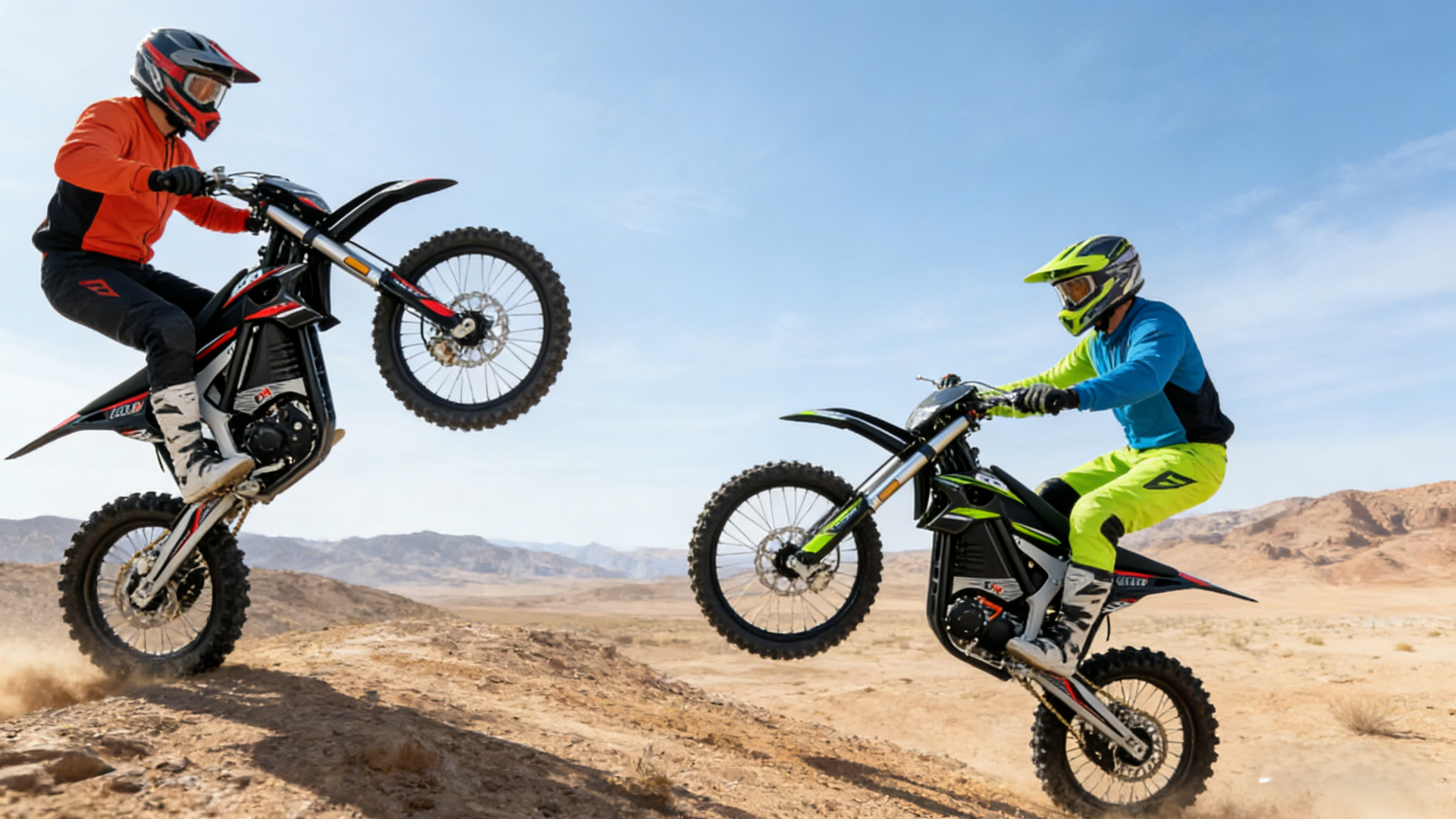
The dirt is calling. And this time, it’s quiet.
If you grew up loving the roar of a two-stroke engine, you might be skeptical about electric. No smoke? No ear-splitting noise? No kicking a starter lever until your leg gives out?
Trust us. We get it.
But here’s the good news: 2026 is the year electric motocross bikes officially grow up. They’re faster, lighter, smarter, and—dare we say—more fun than anything with a gas tank. Whether you’re a weekend warrior, a trail explorer, or a parent looking to ride with your teenager, this guide will walk you through everything you need to know.
Let’s dig in.
Why Electric? (And Why Right Now?)
Let’s start with the big question: Why would anyone switch to an electric dirt bike?
The old-school answer used to be “environmental guilt.” That’s boring. The real answer is performance.
Electric motors deliver instant torque. That means when you twist the throttle, you get 100% power immediately. No waiting for RPMs to build. No clutch feathering. No stalling on a hill. Just smooth, explosive acceleration that puts a grin on your face every single time.
And because electric motors have fewer moving parts, they require way less maintenance. No oil changes. No air filter cleaning. No carburetor jetting. No valve adjustments. You charge it, you ride it, you clean it, and you store it. That’s it.
Plus, let’s be honest: Neighbors love them. You can practice in your backyard without starting a noise war. You can ride early morning trails without scaring off every deer within a mile. And you can show up at the track without earplugs.
The 2026 models take all those benefits and crank them up to eleven. Battery tech has improved dramatically. Weight has dropped. Range has increased. And smart features—like app-based tuning and regenerative braking—make these bikes feel like they came from the future.
Who Is This Bike For?
One of the best things about the 2026 electric motocross scene is variety. There’s a bike for almost every type of rider.
- The Beginner: If you’re new to dirt, electric bikes are incredibly forgiving. No clutch means one less thing to think about. Adjustable power modes let you start slow and build confidence. You can focus on body position and cornering instead of fighting the machine.
- The Weekend Trail Rider: If you love exploring single-track and backcountry trails, electric bikes offer quiet, smooth power that won’t tire you out. Plus, you can ride places where noise restrictions used to keep gas bikes out.
- The Track Enthusiast: Yes, electric bikes are race-worthy. Some 2026 models feature track-focused suspension, aggressive ergonomics, and power profiles that mimic 250cc or even 450cc gas bikes. They hook up out of corners like nothing else.
- The Comeback Rider: Maybe you rode as a kid, took a 20-year break, and now your body is telling you that kicking a stubborn 450 isn’t a great idea. Electric bikes are easier on your joints, easier on your ears, and easier on your ego.
- The Parent-Teen Combo: Many brands now offer bikes with adjustable power limits. You can ride the same bike at 30% power for your teenager and 100% power for yourself. That’s smart money right there.
What to Look For in a 2026 Electric Motocross Bike
Okay, here’s the meat of the guide. When you start shopping, you’ll see a lot of numbers and jargon. Let’s break them down into plain English.
1. Battery Capacity (kWh)
Think of this as your “fuel tank.” Bigger numbers mean more range. In 2026, most adult-sized electric motocross bikes come with batteries between 3.5 kWh and 7.5 kWh.
- 3.5–4.5 kWh: Great for 1–2 hours of trail riding or 30–45 minutes of aggressive track use.
- 5.0–7.5 kWh: Ideal for longer adventures, enduro racing, or all-day riding with a spare battery.
Keep in mind: riding style matters. Hard acceleration and deep sand will drain battery faster. Mellow trail cruising will stretch it out.
2. Motor Power (kW)
This is the “horsepower” of the electric world. Most adult bikes range from 10 kW to 25 kW (that’s roughly 13 to 34 horsepower).
- 10–15 kW: Feels like a 125cc–250cc gas bike. Great for beginners or lighter riders.
- 18–25 kW: Closer to a 450cc. These bikes are serious machines. They’ll lift the front wheel without even trying.
Most 2026 bikes let you adjust power output on the fly via a handlebar switch or smartphone app. So you can buy the powerful model and dial it down while you learn.
3. Weight
Electric bikes used to be heavy. Not anymore. The best 2026 models weigh between 220 and 260 pounds—right in line with gas bikes.
Look for bikes with the battery mounted low in the frame. That lowers the center of gravity, making the bike feel much lighter than it actually is. You’ll notice it when you’re picking the bike up or leaning into a berm.
4. Charging Time
This is the one area where electric still plays catch-up. Most bikes take 1.5 to 4 hours for a full charge from empty.
But here’s the good news: many 2026 models support fast charging (up to 80% in 45 minutes). If you’re doing a full day of riding, bring a portable generator or an extra battery. More and more tracks and trailheads are installing charging stations too.
5. Suspension and Brakes
Electric power is fun, but you need to stop and turn just as well. Look for:
- Adjustable forks (at least compression and rebound damping).
- Rear shock with preload adjustment.
- Hydraulic disc brakes front and rear—preferably with oversized rotors for stopping power.
- Some premium models include regenerative braking, which recovers energy while slowing down and gives you more range.
6. Smart Features
This is where 2026 shines. Many bikes now come with:
- Bluetooth app connectivity to adjust power, throttle response, and regen braking.
- GPS tracking so you never lose your bike—or yourself.
- Ride analytics showing your speed, lean angle, jump distance, and battery usage.
- Over-the-air updates, so your bike gets better over time without visiting a dealer.
It sounds fancy, but it’s actually user-friendly. Most apps are simple and intuitive, even for tech-shy riders.
Top 2026 Electric Motocross Models to Know
Let’s highlight a few standouts. These aren’t the only good bikes, but they represent the best of what’s available right now.
1. Stark VARG (2026 Edition)
The VARG has been a game-changer since day one. The 2026 version is lighter, with improved cooling and a new traction control system that feels like magic. It produces up to 25 kW and weighs just 240 pounds. The app lets you choose from over 100 power profiles. It’s the bike that makes gas riders nervous.
2. Zero FX (2026)
Zero has been in the electric game for years. The new FX features a 7.2 kWh battery, modular design (you can carry a second battery in a backpack), and a surprisingly smooth power delivery. It’s less aggressive than the VARG, making it ideal for trail riding and commuting to the trailhead.
3. KTM Freeride E-XC (2026)
KTM knows dirt. Their Freeride E-XC is built for enduro and technical trails. It’s nimble, with a low seat height and super responsive handling. The 2026 model gets a bigger battery and a new motor that runs cooler on long climbs. If you love rocky singletrack, this one’s for you.
4. Sur-Ron Storm Bee
Sur-Ron made its name with smaller bikes. The Storm Bee is their full-size adult offering. It’s more affordable than the European models, with decent range and solid build quality. A great entry point for riders who want to dip their toes into electric without breaking the bank.
Cost Breakdown: What Should You Expect?
Let’s talk money, because this is where people get nervous.
Entry-level adult electric motocross bikes start around $7,000–$9,000 USD. These are solid machines but may have smaller batteries or simpler suspension.
Mid-range models run $10,000–$13,000. You get better batteries, premium suspension, and smart features.
High-end models (like the Stark VARG or KTM) cost $14,000–$18,000. These are race-ready, packed with tech, and built to last.
Compare that to a new 450cc gas bike—around $10,000–$12,000—and the price gap is shrinking fast.
But don’t forget the long-term savings. No gas. Very little maintenance. No valve jobs. No carb cleanings. Over five years, you’ll save thousands on fuel and parts. Plus, many states and provinces offer tax incentives or rebates for electric off-road vehicles.
The Riding Experience: What It Actually Feels Like
We’ve talked numbers. Now let’s talk feeling.
The first time you ride a 2026 electric motocross bike, you’ll notice two things immediately:
- Silence. Not total silence—you’ll hear tire noise, chain whir, and a faint electric hum. But it’s peaceful. You hear the dirt. You hear your breathing. You hear the joy.
- Instant thrust. Roll the throttle and the bike leaps forward with zero hesitation. It’s addictive. Corners become playgrounds because you can accelerate out of them so smoothly. Hills feel easier because you don’t lose momentum shifting.
The lack of engine braking takes some getting used to. Gas bikes slow down when you let off the throttle. Electric bikes coast more freely. But most 2026 models have adjustable regenerative braking, so you can dial in exactly how much drag you want.
And here’s the kicker: you ride better. Because the bike is quieter and more responsive, you’re more connected to the terrain. You feel the ruts. You sense the traction. You become one with the bike faster than you ever did on a noisy smoker.
Charging Infrastructure: It’s Getting Better
One common worry is “Where do I charge?”
At home, it’s easy—just plug into any standard 110V outlet for a slow charge or install a 220V outlet for fast charging. Many riders install one in their garage or shed.
On the trail, portable charging stations and battery swap programs are popping up across the US and Canada. Some off-road parks now have solar-powered charging racks. And if you’re doing a multi-day trip, a quiet 2000W generator can charge your bike in about two hours.
In 2026, range anxiety is becoming a thing of the past. Most riders get 2–3 hours of hard riding, which is plenty for a morning session. Bring a spare battery and you’re set for the whole day.
Maintenance: The Dream Schedule
Let’s be honest—maintenance is the least fun part of riding. Electric bikes make it painless.
Typical Electric Bike Maintenance:
- After every ride: Clean the chain, lube it, and wash the bike.
- Every 10 hours: Check bolt torque, inspect brake pads, and clean the air filter (yes, some e-bikes still have one for motor cooling).
- Every 50 hours: Check brake fluid and suspension oil.
- Annually: Software update and battery health check.
That’s it. No pistons. No rings. No valves. No clutches. No exhaust packing. You spend more time riding and less time wrenching.
And if you’re not mechanically inclined, that’s okay too. Most dealers offer simple service packages that cost a fraction of what gas bike maintenance runs.
Common Myths (Busted)
Let’s clear up a few things:
Myth #1: Electric bikes are slow.
False. The top 2026 models hit 60 mph in under 3 seconds. They’re faster than most 250cc bikes.
Myth #2: They don’t have enough range.
For most recreational riders, they do. Unless you’re racing a 4-hour enduro, you’re fine. And if you are, bring a spare battery.
Myth #3: They’re too quiet to be safe on trails.
Actually, quiet is safer. You can hear other riders coming. Wildlife isn’t startled. And you can use a whistle or bell if you want to alert others.
Myth #4: They’re toys, not serious bikes.
Tell that to the riders winning electric classes at AMA events. These are real motorcycles.
How to Choose the Right One for You
Here’s a simple step-by-step process:
- Determine your budget. Include tax, gear, charger upgrades, and a spare battery if needed.
- Identify your primary use. Track? Trails? Both?
- Pick your power level. If you’re new, go mid-range and dial it down. If you’re experienced, go big.
- Test ride if possible. Many dealers now offer demo days. Feel the weight, ergonomics, and throttle response.
- Consider service availability. Buy from a brand with local dealer support or strong online community.
- Read owner reviews. Real-world experiences beat marketing hype every time.
The Future Is Bright
2026 is an exciting year to be a dirt rider. The technology is mature. The bikes are proven. The community is growing. And the experience is simply joyful.
Electric motocross isn’t about saving the planet—it’s about saving the fun. It’s about riding more, wrenching less, and exploring places you’ve never been. It’s about bringing new riders into the sport. It’s about hearing the birds, feeling the wind, and laughing out loud as you pop over a whoop section in total silence.
If you’ve been on the fence, hop off. The ground is firm, the bikes are ready, and the trails are waiting.
So go ahead—twist that throttle. Your electric adventure starts now.
Ride safe. Ride often. Ride electric.
