There is a particular magic to American off-road motorcycling that transcends mere recreation. It’s woven into the DNA of a nation built upon frontier spirit, mechanical ingenuity, and an insatiable hunger for wild places. From the sun-baked desert expanses of Southern California to the verdant Appalachian trails, from the red rock canyons of Utah to the pine forests of the Pacific Northwest, American riders have long defined their freedom by the roar of two-stroke engines and the smell of premix exhaust. But something extraordinary is happening across this vast and varied landscape—something that promises not to diminish that spirit but to elevate it beyond anything the pioneers of our sport could have imagined.
Welcome to the electric revolution in American off-road riding.
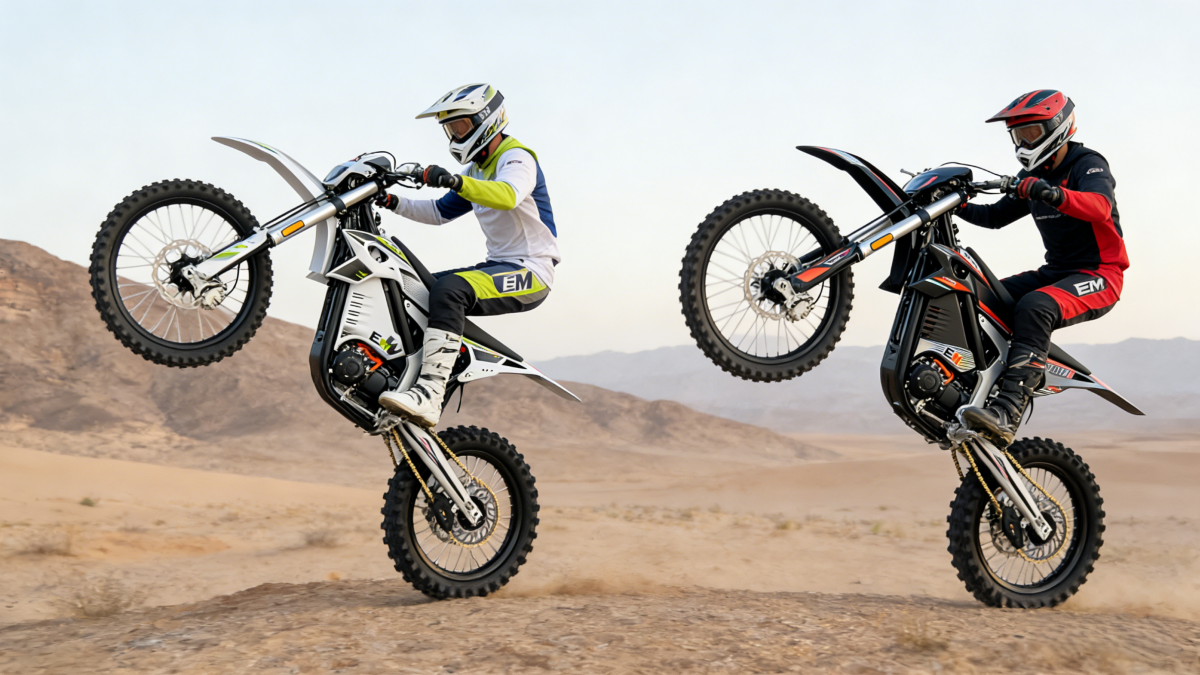
The Electric Dirt Bike has officially transitioned from curiosity to mainstream, from experimental novelty to serious performance machine. What began as a whisper in the garages of California innovators has become a thunderous movement reshaping how Americans experience adventure on two wheels. In 2026, riders from coast to coast are trading gas cans for charging cables, discovering that the future they feared might compromise their passion has instead amplified it beyond recognition .
This transformation is not happening in isolation. It’s driven by technological breakthroughs that solve historical limitations, regulatory pressures that demand cleaner alternatives, and—most importantly—riders who experience electric performance and refuse to return to the compromises of internal combustion. The American market for Electric Dirt Bike machines is exploding, with industry valuations projected to grow from $1.2 billion in 2024 to $4.5 billion by 2033, representing a compound annual growth rate of 16.5% .
Today, we explore this revolution through the lens of three brands that exemplify its diverse expressions: the emerging force of TyeMotor, the accessible powerhouse Sur-Ron, and the racing-derived excellence of Stark Varg. Together, they illustrate how electric technology is not merely replacing gasoline but redefining what off-road motorcycling can achieve.
The Landscape Transformed: Why 2026 Marks the Tipping Point
To understand the magnitude of what’s happening in American off-road riding, we must appreciate how rapidly the technological and market landscape has evolved. Just a few years ago, “electric” was a niche category for early adopters willing to accept limitations in exchange for environmental virtue. Today, that characterization belongs to history .
The manufacturing trends dominating 2026 reveal an industry that has matured dramatically. High-output brushless DC motors have become standard, with the shift from 1000W to 2000W systems now expected rather than exceptional. Mid-drive motor configurations have displaced hub motors for serious off-road applications, offering superior weight distribution and torque density that transforms handling precision .
Smart telemetry and app connectivity have transformed these machines from mechanical devices into integrated technology platforms. Riders now adjust torque curves, set top-speed limits for parental control, and customize regenerative braking intensity through smartphone interfaces. The bike becomes a personalized expression of riding preference, configurable for terrain, skill level, and ambition .
Materials science has kept pace with electrical innovation. The industry-wide movement from heavy steel frames toward high-tensile aluminum alloys and carbon-reinforced composites has produced machines that handle with agility previously impossible given battery mass. Weight, long the enemy of electric performance, has been systematically attacked through aerospace-grade engineering .
Perhaps most significantly, the “wait and charge” model is dying. Swappable battery ecosystems now allow riders to exchange depleted packs for fresh ones in under 60 seconds, eliminating range anxiety for rental fleets, adventure parks, and competitive events. Combined with charging times that have dropped to 1-2 hours for complete replenishment, the practical barriers to electric adoption have effectively disappeared .
Waterproofing has reached IP67 ratings, ensuring that controllers and battery connectors withstand the immersion, mud, and pressure washing that define genuine off-road use. This isn’t marketing rhetoric—it’s engineering necessity for machines that will encounter creek crossings, torrential downpours, and the pressure washers that follow dirty weekends .
TyeMoto: The New American Electric Spirit
Emerging from the crucible of American innovation, TyeMotor represents a fresh vision for what domestic electric off-road performance can achieve. While established European and Asian manufacturers have dominated early electric development, TyeMotor channels distinctly American values: accessibility, versatility, and unapologetic enthusiasm for power.
The brand’s philosophy centers on democratizing electric performance without diluting it. Their machines incorporate the mid-drive architecture that serious off-roaders demand, placing motor mass centrally for the low center of gravity that transforms handling dynamics. This 50:50 weight distribution creates stability at speed and flickability in tight technical terrain—the combination that defines capable trail machines .
TyeMotor’s approach to the American market recognizes the unique demands of U.S. riding conditions. American trails vary enormously from region to region, requiring machines adaptable to desert sand, mountain rock, forest mud, and everything between. Their suspension configurations accommodate this diversity, with tunable systems that riders can optimize for local conditions.
The brand’s integration of smart technology reflects American expectations for connectivity and customization. Companion apps provide not merely battery monitoring but ride logging, route sharing, and community features that connect riders across the country’s vast expanse. This social dimension transforms individual adventure into collective experience, building the communities that sustain riding culture.
For American riders seeking an entry point into electric off-roading that doesn’t compromise on capability, TyeMotor offers a compelling proposition. Their machines demonstrate that domestic manufacturing can compete with established global players while addressing specifically American needs and aspirations.
Sur-Ron: The Accessible Powerhouse That Conquered America
No brand better illustrates the democratization of electric off-road performance than Sur-Ron. This Chinese manufacturer has achieved what seemed impossible just years ago: delivering genuine dirt bike capability at price points that welcome riders who might otherwise remain spectators.
The Sur-Ron phenomenon speaks to a particular American value—performance accessibility. Their machines pack impressive power into sub-140-pound packages, creating a category that bridges mountain bikes and full motorcycles. Models like the Light Bee X have become ubiquitous on American trails, favored by riders who appreciate nimble handling and sufficient power for backyard tracks, tight trails, and technical exploration .
What Sur-Ron has mastered is the balance point between capability and approachability. Their electric powertrains deliver instant torque that makes climbing and technical sections manageable for intermediate riders, while the lightweight chassis inspires confidence that heavier machines cannot match. The result is a platform for skill development—bikes that grow with riders as they progress from tentative beginners to accomplished trail veterans.
The American Sur-Ron community has become a vibrant subculture, with modification ecosystems, riding groups, and online forums that share knowledge and celebrate the brand’s possibilities. This grassroots enthusiasm reflects something essential about American motorcycling culture: the joy of personalization, the satisfaction of extracting maximum performance from affordable platforms, the community that forms around shared passion rather than exclusive prestige.
For American riders seeking their first Electric Dirt Bike, or experienced enthusiasts wanting a versatile secondary machine, Sur-Ron offers an entry point that doesn’t demand compromise. The brand proves that electric performance need not be expensive to be exhilarating.
Stark Varg: Racing Pedigree Meets Electric Revolution
At the pinnacle of American electric off-road performance stands the Stark Varg, a machine that has silenced skeptics and redefined competitive possibilities. Developed by Stark Future and validated through professional racing, the Varg demonstrates that electric technology can not merely match but exceed gasoline performance at the highest levels.
The Stark Varg’s specifications read like a wish list for serious riders: power output that embarrasses 450cc four-stroke competitors, range sufficient for complete motocross events or extended trail sessions, and charging infrastructure that supports competitive use. This is not an electric machine apologizing for its nature—it’s an electric machine celebrating advantages that internal combustion cannot replicate .
What distinguishes the Varg in American markets is its racing credibility. The bike was developed with professional input, tested against the best gasoline machines, and proven in competition. When American riders see the Varg launching out of corners with instantaneous torque, clearing jumps with precision, and finishing events with energy to spare, the argument about electric performance limitations collapses.
The Varg’s technology reflects lessons learned from Formula E and automotive electric racing. Battery thermal management maintains optimal operating temperatures during sustained high-output use. The chassis integrates battery mass as a handling advantage rather than accepting it as a burden. Regenerative systems recover energy during deceleration, extending effective range without diminishing performance.
For American competitive riders and serious enthusiasts, the Stark Varg represents the apex of current electric technology. It demonstrates that the transition to electric need not involve performance sacrifice—that, in many respects, the electric configuration offers advantages that gasoline engineers have spent decades attempting to replicate through mechanical complexity.
The brand’s presence in American markets, alongside its racing programs, builds credibility that accelerates mainstream adoption. When prospective buyers see professional riders choosing electric, the technology transitions from suspect alternative to desirable upgrade.
The American Riding Experience Transformed
The transition to Electric Dirt Bike machines transforms American off-road riding in dimensions that extend far beyond specification comparisons. Riders who make the switch consistently report revelations that redefine their relationship with the sport.
The Soundscape Revolution: The elimination of engine noise fundamentally changes wilderness immersion. American riders discover sounds previously drowned out by combustion: tires gripping granite in Moab, suspension absorbing roots in the Cascades, wind through Appalachian rhododendron. This sensory renaissance makes riders more attuned to terrain and technique, enhancing both safety and enjoyment .
The Torque Revelation: Electric motors deliver maximum torque from zero RPM, providing climbing capability and technical precision that transforms challenging terrain. American riders accustomed to managing power bands and clutch engagement discover a new freedom—simply twisting the throttle and receiving exactly the power they need, when they need it.
The Maintenance Liberation: American riding seasons are precious, particularly in northern climates where winter interrupts adventure for months. Electric machines maximize trail time by eliminating the maintenance rituals that consume weekends. No oil changes, no filter cleanings, no carburetor adjustments for altitude variation between sea-level Florida and 10,000-foot Colorado passes. When conditions permit, you ride—immediately, reliably, without preparation .
The Access Expansion: Noise has historically restricted where Americans can ride. National forests, municipal parks, and private lands increasingly prohibit or limit gasoline-powered recreation. Electric machines, with their minimal acoustic footprint, open doors that combustion has closed. The future of trail access will be determined by compatibility with conservation values, and electric technology provides that compatibility .
The Economic Rationality: With American fuel prices subject to global volatility and the environmental costs of petroleum increasingly internalized, electric operating economics become compelling. Electricity is cheaper than gasoline everywhere, and the efficiency advantages of electric drivetrains—converting 90% of electrical energy into motion versus 20% for internal combustion—compound these savings over years of ownership .
Racing Forward: Electric Competition Legitimizes Performance
The credibility of electric off-road performance in American consciousness has been cemented through racing. When Honda’s CR Electric Proto grabbed holeshots and ran at the front against 450cc gas bikes in the All Japan Motocross Championship, the message resonated globally: electric belongs at the highest competitive levels .
In American markets, this racing validation translates to consumer confidence. The FTR series in Florida represents America’s most established electric dirt bike racing venue, providing competitive platforms that drive innovation and capture public imagination. Professional riders who compete on electric machines validate their performance credentials and demonstrate that electric technology satisfies even the most demanding users .
The racing programs serve as research and development laboratories, with lessons learned on track translating rapidly to consumer products. Suspension settings developed for professional electric machines inform production specifications. Battery management strategies refined in competition improve reliability for everyday riders. The feedback loop between racing and consumer products accelerates advancement for all participants.
For American riders, the existence of credible electric racing addresses persistent skepticism about whether these machines can truly satisfy performance enthusiasts. The answer, increasingly demonstrated on tracks across the nation, is that electric not only satisfies but often exceeds what gasoline can deliver.
The Road Ahead: America’s Electric Off-Road Future
The trajectory of American electric off-road motorcycling points toward continued acceleration and expansion. Market projections paint an extraordinary picture of growth and maturation that will transform the landscape within this decade.
The global electric dirt bike market, valued at approximately $1.4 billion in 2022, is anticipated to grow at a compound annual growth rate of around 8.5% through 2030, with North America leading adoption alongside Europe . More aggressive forecasts suggest the market could reach $4.5 billion by 2033, reflecting the accelerating pace of technological improvement and consumer acceptance .
For American riders, this growth translates to expanded options across every price point and performance category. The segmentation between economical machines under $2,500, mid-range offerings between $2,500 and $5,000, and premium performance models above $5,000 ensures that electric adoption is accessible regardless of budget .
Anticipated developments include solid-state batteries promising energy density improvements that will extend range and reduce weight; lightweight materials continuing to enhance handling agility; integrated ecosystems of charging infrastructure, route planning, and vehicle connectivity that eliminate friction from electric adventure; and regulatory evolution that increasingly incentivizes electric recreation through access privileges and fee structures .
The major manufacturers—Triumph Motorcycles, Yamaha, BMW Motorrad, Stark Future, Sur-Ron, Zero Motorcycles, and emerging players like TyeMotor—are investing research and development resources that will compound advancement rates. Each generation of machines brings significant improvements that address historical limitations and expand possibilities .
The Call of the Electric Wild
America’s relationship with off-road motorcycling has always been about freedom—the freedom to explore vast landscapes, to challenge personal limits, to connect with wild places and fellow adventurers. That freedom has never depended upon any particular technology, but upon the spirit of innovation that constantly seeks better ways to pursue passion.
The Electric Dirt Bike represents the latest and perhaps most significant evolution in this pursuit. It offers performance that satisfies the most demanding riders, accessibility that welcomes newcomers, sustainability that preserves the landscapes we cherish, and silence that restores the soundscapes we have too long diminished.
TyeMotor, Sur-Ron, and Stark Varg exemplify the diverse expressions of this revolution—American innovation, accessible democratization, and racing-derived excellence. Together, they demonstrate that electric technology serves every rider, every ambition, every dream of two-wheeled adventure.
The revolution is here. The trails are waiting. From the Mojave to the Appalachians, from the Rockies to the Everglades, a new chapter in American off-road riding is being written by riders who refuse to compromise between passion and responsibility, between thrill and sustainability, between the roar of the past and the whisper of the future.
Charge your machine. Charge your spirit. The electric wild calls, and America is answering with open throttle and full heart.
Ride on.
