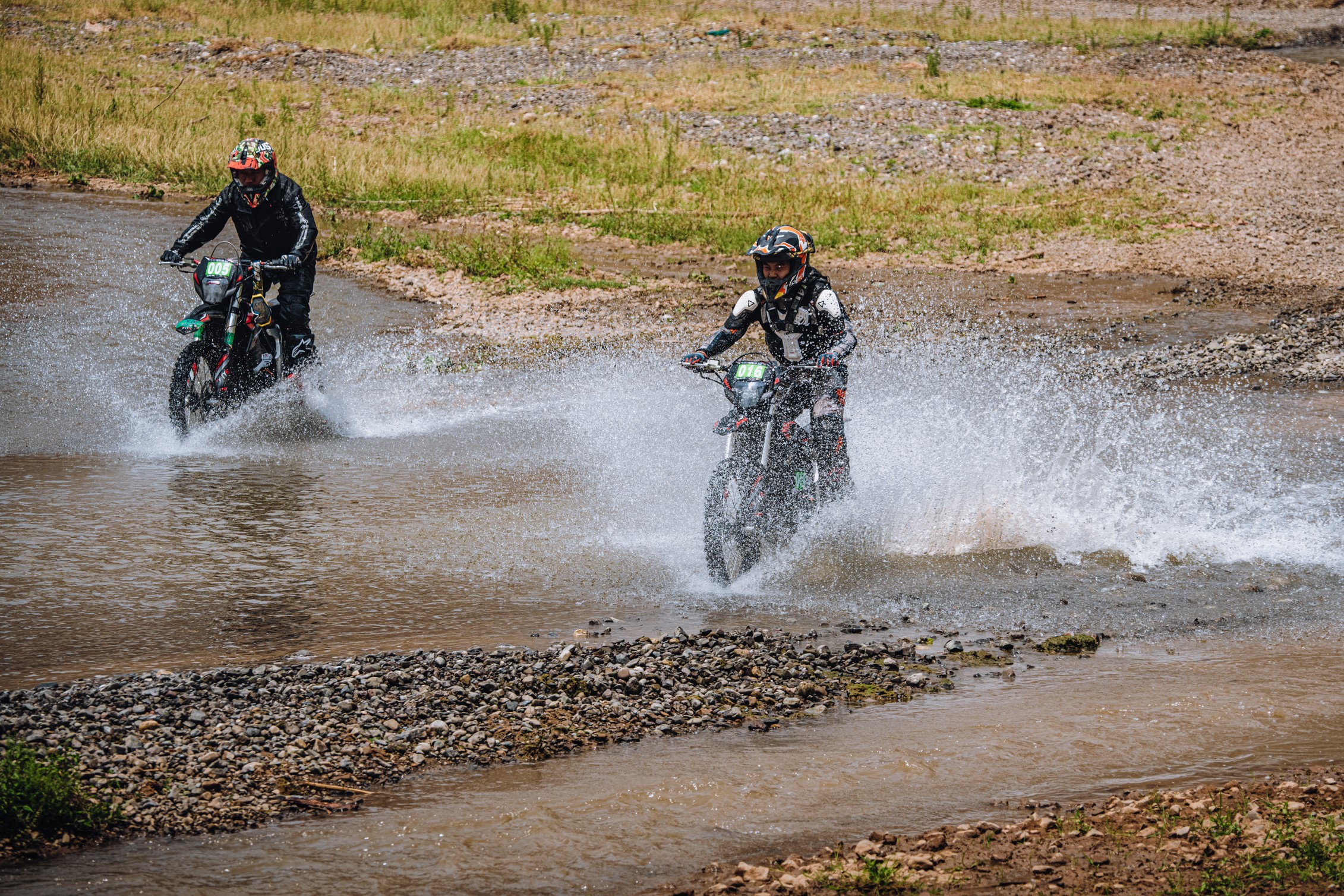
The off-road world is going electric—fast, quiet, and unstoppable.
1. The Sudden Boom—Why Everyone Is Talking About Electric Dirtbikes
Scroll through Instagram on any given weekend and you’ll see pro riders, weekend warriors, and even ten-year-olds launching off berms on machines that make almost no sound. Track-day attendance lists are filling up with models named “Stark VARG,” “Surron Light Bee,” and “Flux Primo” instead of the usual 250-cc and 450-cc gas bikes. Dealers report year-over-year sales growth above 30 %, and every major motorcycle OEM has either released an electric dirt platform or put one on the 2026 roadmap. What was a fringe segment five years ago is now the fastest-growing slice of the off-road market .
2. What Exactly Is an Electric Dirtbike?
An electric dirtbike (also called an e-dirtbike or dirt e-bike) is a purpose-built off-road motorcycle whose drivetrain has been completely electrified:
- Powerplant: a brushless DC electric motor, usually liquid-cooled, delivering anywhere from 6 kW (entry-level trail) to 60 kW+ (race-spec).
- Energy storage: a rechargeable lithium-ion or next-gen graphene-enhanced battery pack, removable or fixed, ranging from 2 kWh play-bike packs to 7–8 kWh endurance units.
- Chassis: lightweight aluminum or chromoly frames, long-travel suspension, and aggressive knobby tires indistinguishable at first glance from their gas cousins.
- Controls: twist throttle, hydraulic brakes, and—critically—software-defined ride modes tunable via smartphone or handlebar switch .
In short, it’s a dirtbike that trades pistons and exhaust pipes for magnets and electrons.
3. Six Clear Advantages over Gas-Powered Dirtbikes
| Advantage | What It Means on the Trail |
|---|---|
| 1. Instant Torque | 0–100 % power in milliseconds; no clutch feathering required to clear that step-up. |
| 2. Zero Emissions | Ride in noise-restricted parks, private estates, or future low-emission zones without guilt—or tickets. |
| 3. Whisper-Quiet Operation | Hear your tires hook up, spot wildlife before it spots you, and keep neighbors happy. |
| 4. Drastically Lower Maintenance | No oil changes, air filters, or top-end rebuilds. Most owners perform a yearly bearing greasing and call it a day . |
| 5. Operating Cost Savings | Roughly $0.02–$0.04 per kilometre in electricity versus $0.10–$0.15 for gas; savings compound quickly during race seasons . |
| 6. Tune-ability & Updates | Over-the-air firmware can add new power maps, traction modes, or safety features overnight—the bike literally gets better while it sits in the garage . |
4. Common Categories of Electric Dirtbikes
- Mini & Youth (2–6 kW, 40–60 cm seat height)
Examples: OSET 24.0R, Surron Light Bee Youth Edition. - Trail / All-Rounder (6–12 kW, 80–95 km/h top speed)
Examples: Surron Ultra Bee, Segway X260. - Enduro / Race (25 kW+, 100 km/h+, swappable batteries)
Examples: Stark VARG MX, Flux Primo, E-Ride Pro SR. - Dual-Sport / Street-Legal (reg indicators, mirrors, DOT tires)
Examples: Zero FXE, KTM Freeride E-XC plated versions. - Trials / Technical (ultra-light, low seat, instant modulation)
Examples: Tactica T-Race Cross, Electric Motion Epure.
5. How to Choose the Right Electric Dirtbike—2025 Buyer Checklist
| Factor | Key Questions To Ask |
|---|---|
| Intended Use | Trails only? MX track? Commute + play? Match power and range accordingly. |
| Range vs. Weight | 140 km sounds great, but a 45 kg battery can feel top-heavy in tight woods; quick-swap packs may be smarter. |
| Charging Reality | Do you have 220 V in the garage? Will you need a 2 kW fast charger or can you live with overnight 800 W? |
| Suspension & Ergonomics | 270 mm travel is overkill for single-track; sit on the bike and check sag numbers like any gas bike. |
| Software & Updates | Can maps be user-tuned via app? Is the manufacturer pushing OTA improvements? If not, the bike is already outdated. |
| Dealer & Parts Network | Batteries age; who will support you in year five? Regional distributors like Surron Dubai now stock packs and firmware tools . |
6. The Road Ahead—Forecasting the 2025-2030 Electric Dirtbike Landscape
- Battery: graphene-pouch cells will push usable ranges past 200 km while cutting weight by 25 %.
- Cost Curve: economies of scale and LFP chemistries should drop mid-tier bike MSRP from ~$6,000 to ~$4,000 by 2028 .
- Motors: axial-flux designs (already in Stark VARG) will deliver 15–20 % more torque per kilogram.
- Charging: 15-minute 80 % DC fast-charge stations—think Tesla Superchargers for dirtbikes—will appear at major OHV parks in North America and Europe.
- Racing: FIM has sanctioned a global “e-MX World Cup” starting 2026; expect factory teams and energy-drink budgets to follow.
- Legislation: Expect more EU forests, California state parks, and UAE desert reserves to open previously gas-only trails to electric only, accelerating adoption .
7. Conclusion—The New Force Has Arrived
Electric dirtbikes are no longer the “quiet alternative”; they are the benchmark. They clear doubles faster, cost less to run, and open riding areas that gasoline simply can’t access anymore. Whether you’re a parent eyeing your kid’s first bike, a racer chasing holeshots, or an explorer mapping the Empty Quarter, 2025’s electric lineup already has a wheelie-ready answer waiting in a showroom—or in your phone’s shopping cart.
Charge up. Gear up. The dirt has gone electric, and the revolution is just getting started.
