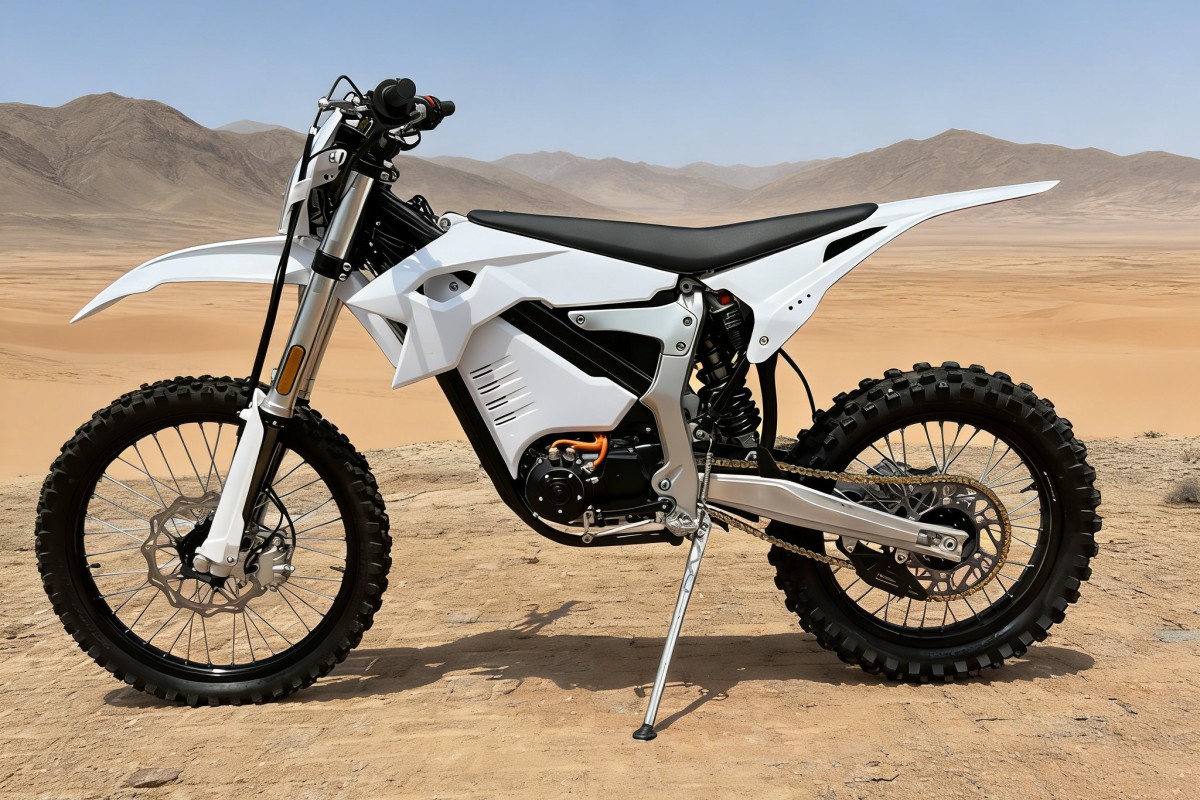
Beyond the Dunes: The Growing Market for Electric Enduro and Motocross Bikes in the GCC
Introduction: A New Sound Across the Desert
For decades, the vast deserts of the Gulf Cooperation Council (GCC) states—Saudi Arabia, the United Arab Emirates, Kuwait, Qatar, Bahrain, and Oman—have been synonymous with the roar of internal combustion engines. From the iconic Toyota Land Cruisers carving through the Rub’ al Khali to the thunder of motocross bikes on purpose-built tracks, the sound of petrol has been the soundtrack of off-road adventure. But a silent revolution is underway. Across the region, a growing community of riders is swapping the familiar hum of two-stroke and four-stroke engines for the near-silent whir of electric motors. The market for electric enduro and motocross bikes in the Gulf is not just emerging; it is accelerating, driven by ambitious government policies, rapid urbanization, and the entry of sophisticated, affordable Chinese brands .
The Gulf’s Electric Vehicle Momentum
While the global electric vehicle (EV) market has been dominated by China, Europe, and North America, the Middle East is rapidly emerging as a critical growth frontier. The UAE is currently the fastest-growing market for EVs in the GCC region, followed closely by Saudi Arabia . This growth is not organic; it is being actively cultivated by governments keen to diversify their fossil-fuel-dependent economies.
The UAE, for example, has set an ambitious target to have 25% of all vehicles on its roads be electric by the end of this decade, backed by a significant investment of over $1.5 billion in EV infrastructure . Saudi Arabia is pursuing a similar path. Through its Public Investment Fund (PIF), the Kingdom has partnered with Hyundai to establish the CEER EV brand, signaling a serious commitment to manufacturing and localizing electric mobility . Even Oman is taking concrete steps, with initiatives like the National Green Mobility Company (NGMC) launched in 2025 to build a comprehensive EV ecosystem, including charging networks and urban planning for low-emission transport .
This top-down policy push is creating a fertile ground for bottom-up consumer adoption. A recent survey indicates that 70% of residents in the GCC region now prioritize eco-friendly transportation options . This rising environmental awareness, combined with government incentives and the status symbol of owning cutting-edge technology, is making electric motorcycles increasingly attractive to a new generation of riders in the region.
Market Dynamics: Segments and Forecasts
The Middle East dirt bike market, which includes motocross and enduro models, is expected to see significant growth from 2025 through 2031, with the electric propulsion segment carving out an increasingly important niche within this broader trend . Market data specifically categorizes electric dirt bikes as a distinct segment, highlighting their growing recognition as a standalone product category alongside electric scooters and standard electric motorcycles .
This growth is underpinned by three key drivers: government support for sustainable transport, rapid urbanization concentrated in major cities like Dubai, Riyadh, and Doha, and the expansion of charging networks . While the current number of public charging stations in the region is around 1,200, this is projected to grow significantly to 5,000 in the coming years, which is crucial for alleviating “range anxiety” among potential buyers .
Conquering the Sands: Performance in Extreme Conditions
One of the most critical questions for any rider in the Gulf is whether an electric bike can truly handle the extreme environment. The desert presents a formidable challenge: temperatures that soar above 45°C, abrasive sand and dust, and vast distances between service points .
Modern electric off-road motorcycles are engineered to meet these challenges head-on. Brands operating in the region emphasize that their machines are designed for the “sand dunes, rocky trails, and urban motocross tracks” characteristic of the Gulf .
Key Performance Metrics for the Gulf
| Metric | Importance for GCC Riding | Key Considerations |
|---|---|---|
| Battery Capacity & Range | Critical for traversing long distances between trails and charging points in high heat. | Models like the Sur-Ron Ultra Bee offer a range of up to 120 kilometers, providing ample range for a day of trail riding. |
| Torque & Motor Output | Essential for climbing sand dunes and navigating rocky wadis. | Instant torque delivery is a key advantage of electric motors, allowing riders to power through loose sand with greater control. |
| Suspension & Ground Clearance | Necessary for navigating uneven terrain and clearing obstacles. | Bikes are designed with robust suspension systems to handle the rigors of desert riding. |
| Climate Adaptability | Battery efficiency can be reduced by extreme heat. | Proper charging practices (e.g., using shaded, ventilated areas) are recommended to maintain performance and battery longevity. |
Major Players and Market Access
The landscape of the GCC’s electric dirt bike market is being shaped by a mix of global brands, with Chinese manufacturers playing a particularly significant role. The global tariff wars between the US, EU, and China have created a market environment where Chinese automakers are actively seeking new markets, and the Gulf has become a key destination . A flood of Chinese EVs is entering the region, and this extends to the electric motorcycle sector .
Sur-Ron has established a strong foothold through official distribution channels. Sur-Ron Dubai, the official UAE distributor, provides expert service, warranty support, and genuine parts, ensuring a robust after-sales network for riders in Saudi Arabia and the wider region . The Sur-Ron Ultra Bee is highlighted for its balance of accessibility and high performance, making it suitable for both entry-level and experienced riders tackling Gulf terrains . Other brands are also likely to follow suit, capitalizing on the region’s purchasing power and growing appetite for electric off-road recreation.
Challenges and Future Outlook
Despite the promising outlook, several challenges must be navigated. While UAE leads in EV adoption, the overall demand in the Gulf is still relatively low compared to other major markets . This is partly due to the region’s historical reliance on cheap fuel, which has made the economic case for EVs less compelling for some consumers. However, as global oil prices remain volatile and governments push for net-zero targets, this equation is changing.
Looking ahead, the future of the market is closely tied to three key trends:
- Infrastructure Expansion: The planned expansion of charging networks across the GCC is the single most important factor for sustained growth. As charging becomes as convenient as filling up at a petrol station, the adoption curve will steepen.
- Mobility as a Service: The rise of electric motorcycle sharing and subscription services, particularly in urban centers of the UAE, Saudi Arabia, and Qatar, is introducing a broader audience to electric two-wheelers . This model is ideal for urban commuters and can serve as an entry point for future dirt bike enthusiasts.
- Regulatory Frameworks: As governments seek to attract investment, they are establishing clearer regulatory standards for electric vehicles. This helps avoid the region becoming a “dumping ground” for low-quality exports and ensures high safety standards, which will ultimately build consumer trust .
Conclusion
The market for electric enduro and motocross bikes in the GCC is poised for significant growth, moving beyond the dunes of novelty to become a mainstream segment of the region’s transportation revolution. With strong government backing, a growing awareness of sustainability, and the entry of high-performance models from brands like Sur-Ron, the future of off-road riding in the Gulf is electric. The silent revolution has begun, and its hum is growing louder across the deserts of Arabia.
