
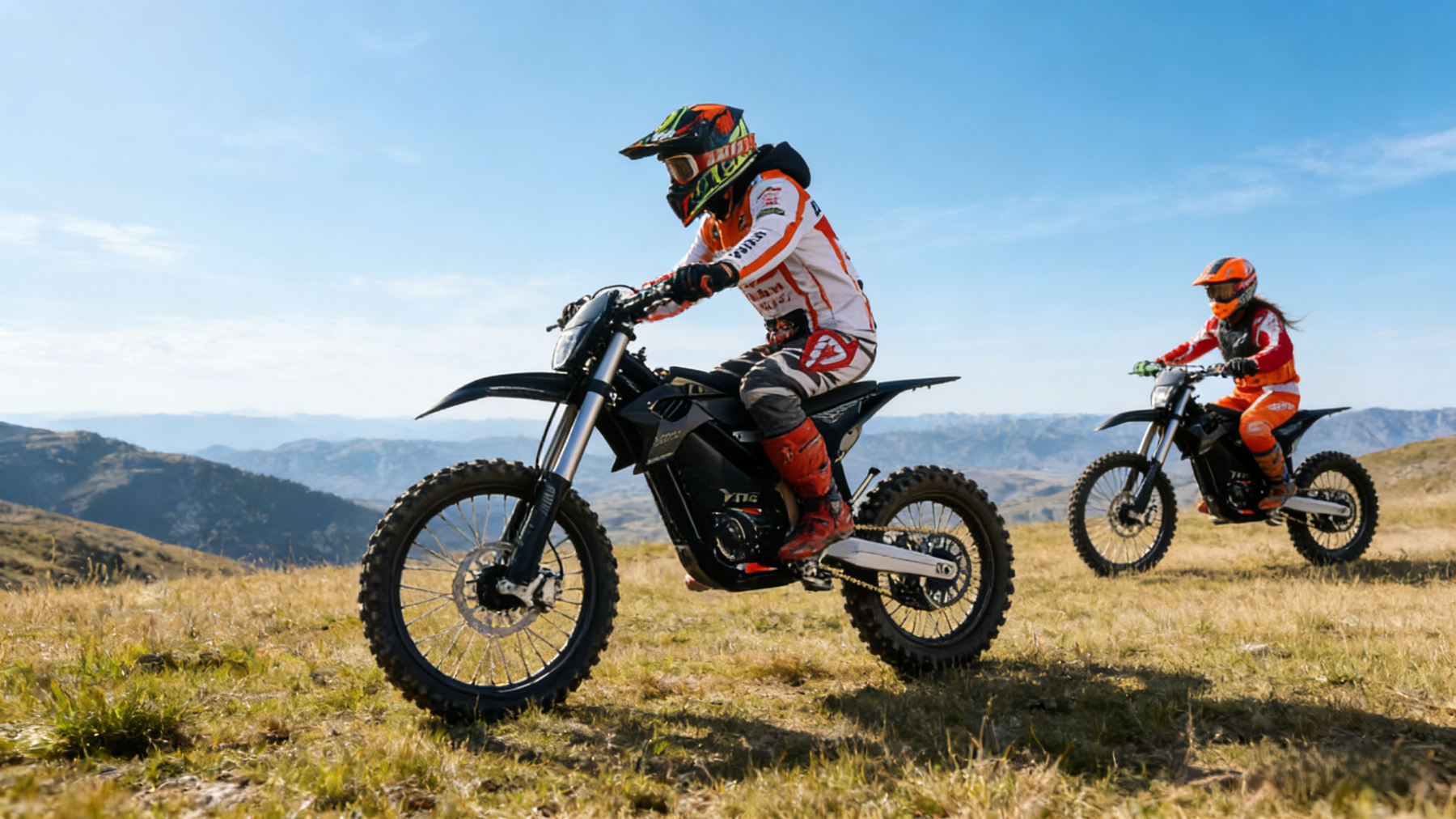
In the rugged, dust-choked landscapes of modern asymmetrical warfare—exemplified by the ongoing complexities in the Middle East, particularly the Iran–U.S. geopolitical friction—mobility is not merely a convenience; it is a matter of survival and strategic advantage. While tanks, drones, and fighter jets dominate the headlines, the dirt bike has emerged as an unsung hero of reconnaissance, rapid insertion, and logistical support in contested environments.
Today, the battlefield is witnessing a paradigm shift. The internal combustion engine (ICE), long the king of off-road mobility, is being challenged by a silent, torquey upstart: the electric dirt bike. To understand which platform reigns supreme, we must analyze this “ultimate showdown” not just through the lens of motocross tracks, but through the harsh realities of modern warfare, energy logistics, and technological reliability. Furthermore, we will examine how manufacturers like TYEMOTOR are positioning themselves within this evolving landscape, bridging the gap between civilian recreation and tactical utility.
Part I: The Context of Conflict
Since the escalation of tensions in the Gulf region and the intricate proxy conflicts spanning Syria, Iraq, and Yemen, the U.S. military and its allied forces have faced a persistent challenge: unconventional warfare. Non-state actors, leveraging complex underground tunnel networks and mountainous terrain, utilize light, agile vehicles to conduct hit-and-run tactics. Conversely, U.S. Special Operations Forces (SOF) require vehicles that can be deployed via helicopter (air-mobile), operate silently for infiltration, and possess the durability to traverse rocky wadis (dry riverbeds) without the need for a constant fuel supply chain.
The traditional Gas Dirt Bike—such as the venerable Honda CRF series or KTM 450—has been the gold standard for decades. However, the introduction of high-performance Electric Dirt Bikes is rewriting tactical doctrine. To understand which is superior, we must dissect four critical pillars: Acoustic Signature (Stealth), Logistics and Supply Chains, Performance in Extreme Conditions, and Thermal Signature.
Part II: The Contenders – A Technical Deep Dive
The Gas Dirt Bike: The Proven Workhorse
The internal combustion engine has powered warfare since World War I. In the dirt bike segment, gas engines offer a specific set of advantages honed by a century of refinement.
1. Energy Density and Range
The most significant tactical advantage of gas bikes remains energy density. A gallon of gasoline contains approximately 33.4 kilowatt-hours (kWh) of potential energy. Even with the inefficiency of a small internal combustion engine (typically 25-30% thermal efficiency), a 2-gallon fuel tank can propel a 250cc or 450cc bike for 60 to 100 miles of hard off-road riding. In a theater of operation where distances between forward operating bases (FOBs) can be vast, this range provides operational security. A rider does not want to be calculating battery percentage while evading hostile reconnaissance.
2. Refueling Infrastructure
Gasoline is ubiquitous. In the context of the U.S.-Iran dynamic, fuel depots are already established for HMMWVs (Humvees) and MRAPs (Mine-Resistant Ambush Protected vehicles). Diesel and gasoline logistics chains are robust, albeit vulnerable. For partner forces or indigenous allies, scavenging fuel from civilian infrastructure is a well-practiced art. Gas bikes fit seamlessly into existing logistical frameworks.
3. Durability and Simplicity
Modern gas bikes are mechanically robust. A carbureted or fuel-injected dirt bike can be repaired in the field with basic tools. In the desert environments of the Middle East, sand ingestion is a constant threat, but field-expedient air filter cleaning is a standard skill. The complexity is manageable.
The Critical Weakness: Thermal and Acoustic Signature. A 450cc four-stroke engine is loud—often exceeding 94 decibels under load. In the deserts of Iraq or the mountains of Iran, sound carries for miles. This eliminates the element of surprise. Moreover, the heat signature from an exhaust pipe glowing red hot is easily visible through thermal optics employed by modern infantry and drones. In a conflict where every movement is surveilled by aerial platforms, the gas bike is a “loud” target.
The Electric Dirt Bike: The Silent Assassin
Electric dirt bikes, such as the Alta Motors Redshift (now defunct but influential), KTM Freeride E-XC, and emerging brands like TYEMOTOR, represent a fundamental shift in off-road mobility.
1. Acoustic Stealth (The Silent Approach)
The most profound tactical advantage of the electric dirt bike is silence. At low speeds or during infiltration, these bikes produce a mere whir of the electric motor, easily masked by ambient wind or the hum of distant generators. In a tactical scenario—such as a raid on a hostile position or a reconnaissance in force—silence is a force multiplier. The ability to approach an objective without announcing one’s presence with the distinctive roar of a two-stroke or four-stroke engine is a game-changer for special reconnaissance.
2. Instantaneous Torque and Low-Speed Maneuverability
While gas engines require clutch modulation and high RPMs to reach peak torque, electric motors deliver 100% of their torque at 0 RPM. In the tight confines of urban combat (such as the alleyways of Fallujah or the narrow streets of Tehran’s outskirts) or extreme rock crawling in the Zagros Mountains, the electric bike offers unparalleled control. A rider can precisely navigate obstacles without the risk of stalling—a significant risk in gas bikes when clutching in technical terrain.
3. Thermal Signature Management
A high-performance electric bike generates heat, primarily in the battery pack and motor controller. However, this heat is significantly easier to manage and mask compared to an internal combustion engine. An electric bike, when stationary with the motor off, emits virtually no thermal signature. Even when running, the heat is distributed across a radiator system (if liquid-cooled) or the motor casing, which runs at a fraction of the temperature of a gas engine’s exhaust header (which can exceed 1,000°F). Against adversaries using thermal drones (a common threat in modern asymmetric warfare), the electric bike provides a vastly smaller detection window.
The Critical Weakness: Range Anxiety and Recharge Logistics. While the electric bike excels in stealth, it suffers in sustainability. The current energy density of lithium-ion batteries (approximately 250-300 Wh/kg) pales in comparison to gasoline. A high-performance electric dirt bike may only offer 1.5 to 2 hours of hard enduro riding. In a combat scenario, where a rider might be out for 12–24 hours, this is unacceptable unless supported by a complex battery-swapping network. Recharging in the field requires solar arrays, generators (which reintroduce noise and fuel logistics), or a robust grid—none of which are reliable in a hostile theater.
Part III: The Geopolitical and Logistical Battlefield
Applying this to the specific context of the U.S. and its allies versus Iranian-backed militias or the Iranian military itself, the choice between electric and gas is dictated by mission type, not necessarily a universal “best.”
The Case for Gas: Sustained Operations
For the U.S. Army’s 10th Mountain Division or Marine Corps units conducting long-range reconnaissance patrols, gas remains king. The supply chain is already in place. Fuel bladders can be airdropped. The ability to refuel a gas bike in 3 minutes is operationally superior to waiting 4 hours for a battery to charge (even with fast charging, which requires heavy infrastructure).
Moreover, in the context of the “war of attrition” that defines modern conflicts, gas bikes are “disposable.” If a gas bike is compromised by an IED (Improvised Explosive Device) or small arms fire, it is often left behind. The financial loss is significant, but the loss of a battery pack—the most expensive component of an electric bike—represents a critical supply chain vulnerability.
The Case for Electric: Asymmetric and Special Operations
However, for the U.S. Special Operations Command (USSOCOM) and the CIA’s paramilitary divisions, electric dirt bikes are increasingly appealing. The focus of modern warfare is shifting from large-scale invasions to “grey zone” operations—covert actions where deniability and stealth are paramount.
Imagine a scenario: A 12-man ODA (Operational Detachment Alpha) team is inserted via MH-47 Chinook helicopters 50 kilometers behind hostile lines in the Zagros Mountains. Their mission is to surveil a suspected nuclear facility. Deploying gas bikes would compromise their position the moment they start the engines. Electric bikes, however, allow them to traverse the final 10 kilometers in absolute silence. They can set up observation posts without the noise signature that would typically alert local shepherds (who often act as informal intelligence for Iranian forces).
This is where TYEMOTOR enters the conversation. As a manufacturer specializing in high-torque, dual-sport electric motorcycles, TYEMOTOR has focused on bridging the gap between recreational off-roading and practical utility. Their engineering philosophy emphasizes robustness and modularity—two attributes critical for military applications. In the context of this showdown, TYEMOTOR represents the “third way”: producing bikes that are not just for adrenaline enthusiasts, but for professionals who require silent mobility without sacrificing the suspension travel and durability of a gas bike.
Part IV: Technical Specifications – Head to Head
To truly understand the “ultimate showdown,” we must compare the raw metrics of a modern gas bike (e.g., KTM 450 EXC-F) against a high-end electric competitor (e.g., Stark VARG or TYEMOTOR’s high-performance models), contextualized for battlefield use.
| Feature | Gas Dirt Bike (KTM 450) | Electric Dirt Bike (Stark VARG / TYEMOTOR) | Tactical Verdict |
|---|---|---|---|
| Range | 60–80 miles (hard off-road) | 2–4 hours (variable by terrain) | Gas Wins. For deep penetration, gas is superior. |
| Refuel/Recharge | 3 minutes (fuel can) | 1-4 hours (depending on charger) | Gas Wins. Operational tempo favors rapid turnaround. |
| Noise Signature | 85-110 dB (highly detectable) | 40-60 dB (stealth) | Electric Wins. Critical for covert ops. |
| Thermal Signature | Very High (exhaust >800°F) | Low (battery/motor <160°F) | Electric Wins. Avoids thermal detection by drones. |
| Torque | 30-40 lb-ft (peaky, high RPM) | 50-70+ lb-ft (instant) | Electric Wins. Superior for technical terrain and escape. |
| Weight | 240-260 lbs (wet) | 240-280 lbs (heavy, but centralized mass) | Tie. Electric feels lighter due to low CG, but gas is easier to lift out of mud. |
| Repairability | High (field repairable) | Low (requires specialized electronics) | Gas Wins. In a remote desert, you can’t code a controller. |
| Maintenance | High (oil changes, valves, air filters) | Low (virtually no drivetrain maintenance) | Electric Wins. Reduces logistical burden of spare parts. |
Part V: The TYEMOTOR Factor – Engineering for the Extreme
In this showdown, the debate is often framed as “old tech vs. new tech.” However, manufacturers like TYEMOTOR are working to neutralize the weaknesses of electric vehicles (EVs) while enhancing their strengths. For the professional user—whether a civilian enduro rider or a military contractor—TYEMOTOR offers several features that shift the calculus:
1. Modular Battery Systems
The primary criticism of electric dirt bikes in combat is the inability to “hot-swap” batteries easily. Recognizing this, TYEMOTOR has focused on creating platforms with quick-release battery packs. In a tactical scenario, a rider could carry a spare battery on a rear rack (similar to a pannier) or a support vehicle could swap batteries in under five minutes. This bridges the gap between the 3-minute refuel of gas and the 4-hour recharge of standard EVs.
2. Robustness in Harsh Climates
The Middle East is a brutal environment for electronics. Sand, dust, and temperatures exceeding 120°F are the norm. TYEMOTOR’s engineering philosophy emphasizes sealed motor units and advanced thermal management systems (liquid cooling for motors and battery management systems). While gas engines suffer from vapor lock and overheating radiators in slow-speed desert crawls, electric motors, by nature, do not suffer from altitude or air density issues, providing consistent power in the thin air of high-altitude Iranian mountain passes.
3. Dual-Sport Versatility
In a theater of war, the line between “road” and “off-road” disappears. TYEMOTOR specializes in dual-sport and electric enduro bikes that are street-legal (or easily adaptable). This allows for seamless integration into urban environments—a critical factor in the context of the Iran-U.S. conflict, where operations may shift from mountain hideouts to urban centers like Tehran or Isfahan. The ability to blend with civilian traffic silently before going off-grid is a capability that loud, plated gas bikes cannot replicate.
Part VI: The Ultimate Verdict – Context is King
There is no single winner in the Electric vs. Gas showdown. Instead, the outcome depends entirely on the operational environment and mission profile.
If the mission is sustained combat, long-range interdiction, or support of conventional forces:
Gas Dirt Bikes win. The logistics tail is established. The reliability in austere conditions is proven. When the objective is to cover 200 miles of desert in 8 hours to link up with a mechanized infantry unit, a gas bike is the only viable option. The risk of detection (acoustic and thermal) is accepted as part of conventional warfare.
If the mission is special reconnaissance, direct action, or covert infiltration:
Electric Dirt Bikes are the superior choice. In the context of the ongoing tensions with Iran, where the U.S. relies on precision strikes and intelligence gathering rather than mass armored columns, stealth is paramount. The ability to move silently through the night, to approach a target without the warning of an engine roar, and to hide behind a low thermal signature changes the risk profile entirely.
Conclusion: The Future of Tactical Mobility
As we look toward the future of conflict—specifically in the volatile region between the U.S. and Iran—the importance of light, agile mobility will only increase. Drones are saturating the skies, making stealth on the ground more critical than ever. While gas dirt bikes will remain in service for the foreseeable future due to their unmatched range and logistical simplicity, the electric dirt bike is no longer a novelty; it is a tactical imperative.
Manufacturers like TYEMOTOR are at the forefront of this transition. By addressing the core vulnerabilities of electric vehicles—battery swapping, thermal management, and durability—they are creating machines that can operate not just on motocross tracks, but in the most hostile environments on Earth.
The “ultimate showdown” is not a battle of obsolescence but of specialization. In the complex, high-stakes theater of the Middle East, commanders who understand the strengths and weaknesses of both platforms will possess a decisive advantage. The gas bike will carry the logistics; the electric bike will carry the mission. Together, they represent the future of asymmetrical, multi-domain operations—where silence, speed, and sustainability converge on two wheels.
In the end, whether navigating the sands of the Arabian Peninsula or the hills of the Zagros, the dirt bike—electric or gas—remains one of the most versatile tools in the modern warrior’s arsenal. And as companies like TYEMOTOR continue to push the boundaries of electric performance, the balance of power in this ultimate showdown is slowly, silently, tilting toward the future.
