
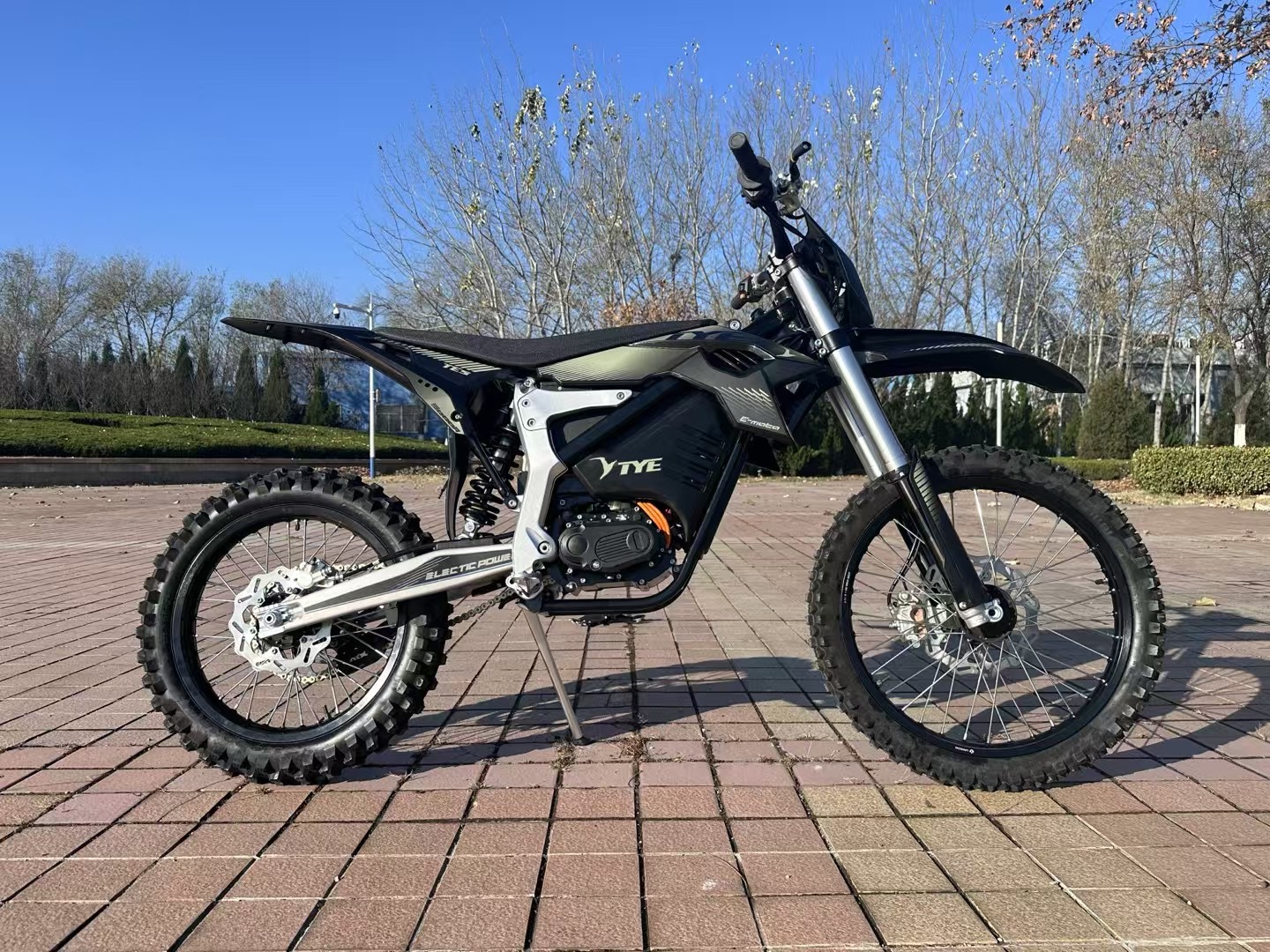
The silent, instantaneous surge of power, the zero emissions, and the minimal maintenance have made Electric Dirt Bikes a revolutionary force in the off-road world. They offer a riding experience unlike any other, allowing you to connect with the trail in a new, visceral way. However, every e-moto rider, from the weekend warrior to the seasoned trailblazer, eventually faces the same question: “How far can I really go?”
Range anxiety is the last frontier for electric vehicle adoption, and Electric Dirt Bikes are no exception. Unlike their street-legal cousins, off-road riding introduces a chaotic mix of steep inclines, loose terrain, and high-power demands that can drain a battery at an alarming rate. Being stranded miles from your truck with a dead battery is a scenario every rider wants to avoid.
But here’s the good news: extending your electric dirt bike’s range isn’t just about buying a bigger battery. It’s a multifaceted approach that combines riding technique, bike setup, and strategic planning. This ultimate guide will dive deep into the art and science of maximizing every watt-hour in your battery pack, ensuring you spend more time conquering trails and less time worrying about your charge level.
Understanding the Core Enemies of Your Battery Range
Before we get to the solutions, it’s crucial to understand what you’re fighting against. The energy in your battery is a finite resource, and it’s consumed by several key factors:
- High Current Draw: The single biggest drain. Every hard twist of the throttle, every acceleration out of a corner, demands a massive surge of current from the battery. It’s simple physics: more power out equals less ride time.
- Weight and Rolling Resistance: Heavier riders and bikes require more energy to move, especially uphill. Knobby tires, while essential for grip, create significant rolling resistance as they deform and dig into the terrain.
- Inclines: Gravity is your battery’s nemesis. Climbing a hill consumes exponentially more energy than riding on flat ground.
- Terrain: Deep mud, sand, and thick loam require constant power and tire spin to navigate, sapping your range much faster than hard-packed dirt.
- Speed and Wind Resistance: While less critical on tight trails than on a road, maintaining consistently high speeds on fire roads or in open areas means fighting against aerodynamic drag.
- Temperature: Lithium-ion batteries, the heart of all modern Electric Dirt Bikes, operate most efficiently in a moderate temperature range (approx. 50°F – 85°F / 10°C – 30°C). Cold weather temporarily reduces their capacity and increases internal resistance, while extreme heat can accelerate long-term degradation.
With these enemies in mind, let’s arm you with the strategies to defeat them.
Part 1: The Rider’s Role: Mastering Efficient Riding Techniques
You are the most significant variable in your bike’s range. A smooth, efficient rider can often extract 20-30% more range than an aggressive, throttle-heavy one.
1. Master the Art of Smooth Throttle Control
This is the golden rule. Imagine an egg between your thumb and the throttle housing—your goal is to never break it. Jerky, on/off throttle inputs are incredibly wasteful. Instead, practice applying power smoothly and progressively. Look ahead on the trail and anticipate obstacles, so you can flow over them with minimal speed changes rather than slamming on the brakes and then hard-accelerating.
2. Embrace “Trail Pace” Over “Race Pace”
If your goal is maximum distance, you must dial back the aggression. A race pace is about maximum exit speed from every corner and attacking every jump. For range extension, focus on maintaining momentum. Carry more speed through corners with better lines rather than relying on acceleration afterward. This “flowy” style is not only easier on your battery but often faster over technical, twisty sections.
3. Use Regenerative Braking Strategically
Many Electric Dirt Bikes feature regenerative braking (or “engine braking” modes). This technology converts some of the bike’s kinetic energy back into electrical energy during deceleration, sending a small charge back to the battery. While it won’t fully recharge your pack, it can add precious percentage points over a long, downhill-intensive ride. Learn to use the regen by lifting off the throttle early when approaching a corner or a downhill, rather than coasting and then using the physical brakes.
4. Manage Your Momentum
This cannot be overstated. It takes far less energy to maintain speed than to create it from a stop. Your mission is to preserve momentum at all costs. Choose lines that allow you to roll over obstacles rather than stop and start. On undulating terrain, carry a little extra speed downhill to help carry you partway up the next climb.
5. Walk Technical Sections
If you’re faced with an extremely technical, slow-speed section of deep ruts, large rocks, or a near-vertical climb that will require massive throttle and likely result in a stall or crash, consider the unthinkable: get off and walk. Pushing your bike for 50 yards can save a significant amount of battery that would have been wasted on tire spin and high-torque, low-speed crawling.
Part 2: Bike Setup and Maintenance for Maximum Efficiency
A well-tuned machine is an efficient machine. Simple adjustments to your Electric Dirt Bike can yield substantial range gains.
1. Tire Pressure and Selection
Tires are your primary interface with the ground, and they have a huge impact on rolling resistance.
- Pressure: Running the correct tire pressure is a delicate balance. Lower pressure offers better grip and suspension but dramatically increases rolling resistance as the tire deforms more. For maximum range, run your tires at the higher end of the recommended pressure range for your weight and terrain. Experiment by adding 1-2 PSI from your normal setting and feel the difference. The bike will feel a bit more sketchy in corners, but you’ll roll easier.
- Selection: A hard-terrain tire with closely spaced, stiffer knobs will have less rolling resistance than a soft-terrain tire with large, widely spaced knobs that squirm and flex. If you frequently ride on mixed or hard-packed trails, consider a tire designed for that specific condition to reduce drag.
2. Chain/Belt Maintenance and Lubrication
A dry, dirty, or overly tight chain (or a stiff belt drive) creates parasitic drag, stealing power that should be propelling you forward. Keep your drive system clean and properly lubricated with a high-quality chain lube. Ensure the chain has the correct amount of slack according to your bike’s manual. A well-maintained drivetrain is a free range extender.
3. Bearing and Suspension Maintenance
Wheel bearings, swingarm bearings, and steering head bearings that are not properly greased or are beginning to fail create drag. Similarly, suspension that is not set up correctly and is constantly packing up or fighting itself wastes energy. Regular maintenance ensures every component moves freely, allowing the motor’s power to be used for forward motion, not overcoming friction.
4. Aerodynamics (Yes, Even Off-Road)
While not as critical as on a street bike, aerodynamics still play a role, especially at higher speeds. Tucking in on long, fast straightaways can reduce the drag your motor has to fight. Removing unnecessary bulky accessories can also help a tiny bit. Every little bit counts.
Part 3: Hardware Upgrades and Strategic Add-ons
If riding technique and maintenance aren’t enough, you can invest in hardware that physically increases your energy capacity or reduces consumption.
1. The Ultimate Upgrade: A Larger Capacity Battery
This is the most direct solution. If your Electric Dirt Bike model offers an optional, higher-capacity battery (e.g., going from a 60V 32Ah pack to a 60V 40Ah pack), this is a guaranteed way to get more range. The downside is cost, as these batteries are often the most expensive component of the bike.
2. The “Jerry Can” Solution: A Secondary Battery Pack
Some manufacturers and third-party companies offer dual-battery kits or modular systems that allow you to add a second, parallel battery. This effectively doubles your capacity but adds significant weight and may require modifications to the bike’s frame or bodywork. For adventure-oriented Electric Dirt Bikes, this is a game-changer.
3. Portable Chargers and Solar
For epic, multi-day adventures, a portable charging solution can be a lifeline.
- Fast Charger: Carrying a compact, powerful fast charger in your truck or base camp means you can top up your battery during a lunch break much more quickly than with a standard charger.
- Portable Power Station: Devices like a Jackery, EcoFlow, or Goal Zero can store several kilowatt-hours of energy. You can charge this from your wall at home or your car’s 12V socket, then use it to charge your bike in the field.
- Solar Panels: Pair a portable power station with a foldable solar panel, and you have a truly off-grid charging solution. While slow, it can provide enough juice to get you back to civilization if you’re stranded.
4. Gear and Packing Optimization
- Travel Light: Every extra pound matters. Go through your riding backpack and eliminate non-essentials. Do you really need three liters of water for a two-hour ride? Opt for lighter tools and gear where possible.
- Rider Weight: This is a sensitive topic, but it’s simple physics. A lighter rider places less demand on the motor. While not a quick fix, it’s a factor to be aware of.
Part 4: The Pre-Ride and In-Ride Strategy
Intelligent planning is your first and most effective line of defense against range anxiety.
1. Know Your Bike’s True Range
The manufacturer’s “max range” figure is almost always a best-case scenario on a smooth, flat surface at low speed. Your real-world range will be less. Go on familiar loops and test your bike. See how much battery you use in different types of terrain. Create a mental map: “This 10-mile single-track loop uses 40% of my battery,” or “Deep sand cuts my range in half.” This empirical data is invaluable.
2. Plan Your Route Meticulously
Use apps like Gaia GPS, OnX Offroad, or Trailforks to plan your ride. Pay attention to:
- Elevation Gain: A route with 2,000 feet of climbing will be far more demanding than one with 500 feet.
- Terrain Type: Adjust your range expectations based on whether you’ll be on hardpack, sand, or rock gardens.
- Bail-Out Points: Always know where you can cut your ride short and take an easier, shorter trail back to your starting point if your battery is depleting faster than expected.
3. Conserve Battery on the Outward Journey
A smart strategy is to ride more conservatively on the way out. You are typically fresher, and the trails are often more familiar at the start. This builds a battery buffer for the return trip. The last thing you want is to use 70% of your battery on the way out and only have 30% left for the (often more tiring) journey back.
4. Monitor Your Battery Usage Actively
Don’t just glance at the battery bar. If your bike has a advanced display, pay attention to the voltage or the amp-hour (Ah) consumption. Voltage tends to drop in a relatively predictable curve, giving you a more accurate sense of your remaining charge than a simple 5-bar display. Knowing you’ve used 15Ah of your 30Ah capacity is a precise and powerful piece of information.
5. The “Reserve Tank” Mindset
Treat the last 15-20% of your battery like a reserve tank on a gas bike. This is not for aggressive riding or big climbs. This is your “get home” safety margin. When you hit this point, dramatically dial back your pace, use the lowest power mode if available, and focus solely on efficiency to return to your charger.
Conclusion: The Mindset of the Long-Range E-Moto Rider
Extending the range of your Electric Dirt Bike is not a single trick but a holistic philosophy. It’s about becoming a smoother, more strategic rider, maintaining your machine with precision, and planning your adventures with intelligence. The pursuit of range will ironically make you a better, faster, and more in-tune rider, as you learn to carry more speed with less effort and read the trail with greater foresight.
The technology of Electric Dirt Bikes is advancing at a breathtaking pace. Batteries are getting denser, motors are getting more efficient, and charging is getting faster. But no matter how advanced the hardware becomes, the skilled, efficient rider will always go farther. So, charge up, apply these tips, and go explore that next ridge with confidence. The trail is waiting.
