
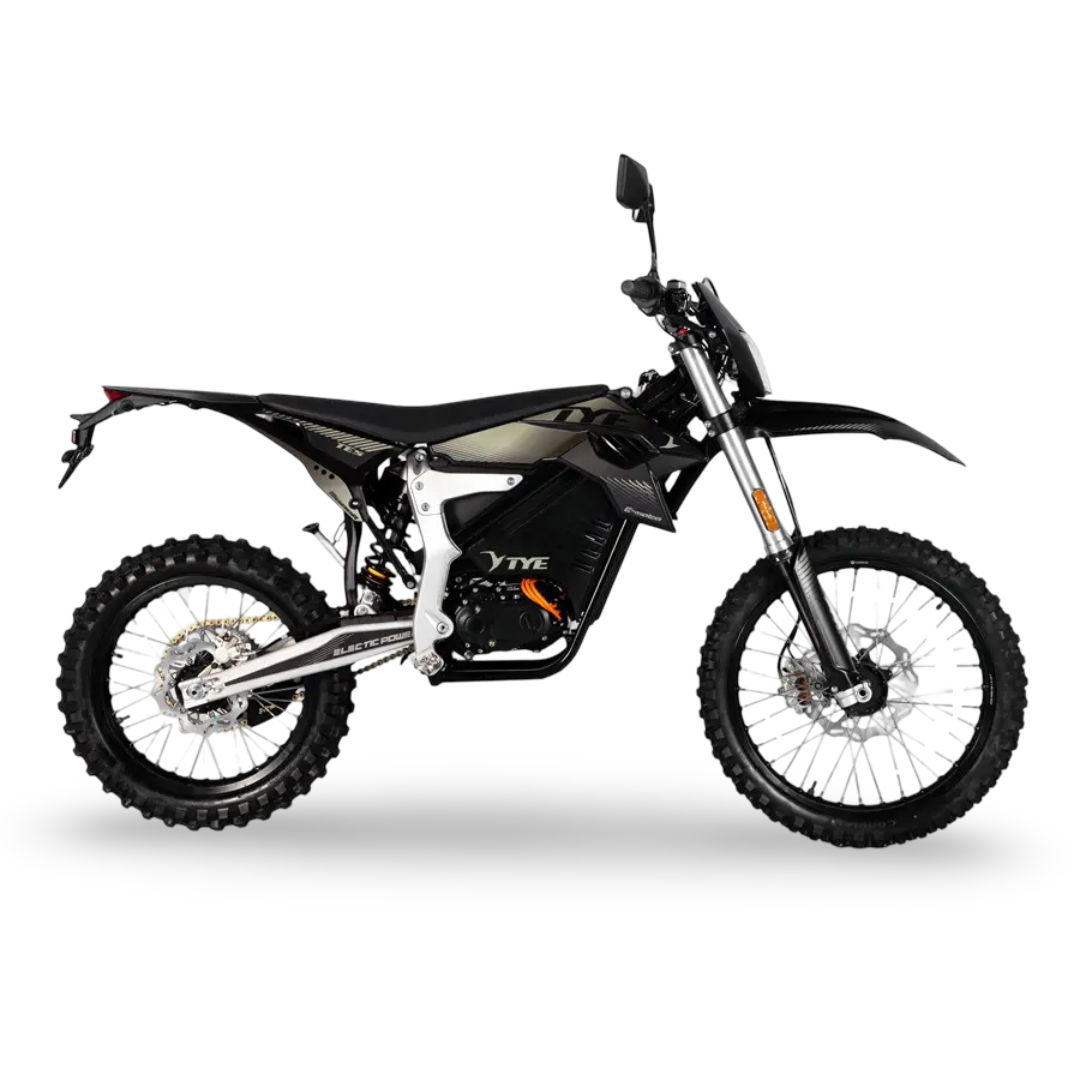
For decades, the soul of off-roading has been synonymous with a specific symphony—the throaty roar of a gasoline engine, the sharp crackle of a high-performance exhaust, and the visceral vibration that travels from the pegs to your very core. It was a language of power, of combustion, of mechanical fury taming wild landscapes. To suggest that this soul could be replaced by near-silent, electric propulsion was, for many, heresy.
But heresy has a way of becoming dogma. A quiet, yet powerful, revolution is sweeping through the forests, deserts, and mountain trails of the world, led by a new breed of machine: the electric enduro motorcycle. This isn’t just a change in propulsion; it’s a fundamental shift in the very experience, accessibility, and ethics of off-road riding. The revolution is here, and it’s whispering.
The Roar Versus the Whir: A Fundamental Paradigm Shift
The first time you throw a leg over a serious electric enduro bike, the absence of noise is deafening. There’s no choke, no clutch lever to feather, no finding the biting point. You simply press a button, hear a faint electronic hum, and twist the throttle. What follows is nothing short of revelatory.
Instantaneous Torque: The Game-Changer
The most immediate and profound advantage of an electric enduro motorcycle is its power delivery. Internal combustion engines (ICE) have to build revs to reach their peak torque. Electric motors deliver 100% of their torque from zero RPM. This translates to a tractor-like ability to claw up near-vertical inclines, a seamless and explosive power band that rockets you out of corners, and an unparalleled level of control. The power is immediate, linear, and perfectly predictable. In technical terrain where precise throttle control is the difference between cleaning a section and stalling out, the electric motor is a masterclass in finesse. It makes the rider more capable, instantly.
The Sound of Focus (or the Lack Thereof)
Silence is the electric dirt bike’s superpower. Without the constant auditory assault of an engine, your senses recalibrate. You begin to hear the subtleties you once missed: the crunch of gravel under your tires, the whisper of wind through pine needles, the sound of your own breathing. This heightened awareness creates a deeper, more immersive connection with the trail. You’re not just riding through nature; you are a part of it.
This silence also has significant practical benefits. It dramatically reduces noise pollution, the primary source of conflict between riders and other trail users like hikers, bikers, and horse riders. It also opens up riding areas previously lost to sound restrictions. Trails closer to residential areas, or in environmentally sensitive zones, become viable again when your bike is as quiet as a bicycle.
The Redefinition of Riding Technique
Riding an electric enduro bike requires a mental reset. The absence of a clutch and gears simplifies the physical act of riding, but it also demands a new approach. Braking becomes a combined effort of the traditional brakes and aggressive regenerative braking (or “engine braking”) that many electric bikes employ. This “one-pedal” style of riding can preserve brake pads and add a new layer of control on descents.
Cornering transforms as well. Without the need to downshift or worry about being in the wrong gear, you can focus entirely on body position, line choice, and throttle modulation. The bike becomes an extension of your will, responding with telepathic immediacy.
The Technological Vanguard: What Makes an Electric Enduro Tick
The magic of these machines isn’t just in the motor; it’s in the integrated system that makes it all possible.
The Powertrain: Motor, Controller, and Battery
At the heart lies a high-torque, brushless DC or AC motor, renowned for its reliability and power density. This is governed by an advanced electronic controller, the “brain” of the bike, which manages power delivery, torque curves, and ride modes (often selectable via a smartphone app or handlebar-mounted switch).
The most critical component, however, is the battery. Modern electric enduros use high-density Lithium-ion or Lithium Polymer battery packs. Range is the most common concern, and rightfully so. While a gas bike can be refueled in minutes, an electric bike requires a power source and time. However, for a typical 2-3 hour trail ride, most modern e-enduros offer ample range (20-50 miles, depending on terrain and riding style). Charging technology is also advancing rapidly, with many bikes capable of an 80% charge in under two hours.
The Chassis: Born from a Clean Slate
Without a bulky engine, transmission, and fuel tank, designers have unprecedented freedom. The chassis can be designed for optimal weight distribution and stiffness. The battery pack is often placed low and centrally, creating an incredibly low center of gravity that makes the bike feel nimble and easy to flick through tight single-track. The overall architecture is simpler, with fewer moving parts to maintain or break.
Software: The Invisible Advantage
This is where the revolution gets smart. Modern electric enduro motorcycles are software-defined vehicles. Manufacturers can—and do—release firmware updates that improve power delivery, increase range via efficiency tweaks, or add new ride modes. Your bike can literally get better over time. Apps can provide detailed diagnostics, track your rides via GPS, and allow for deep customization of the riding experience.
The Environmental and Social License to Ride
The environmental argument for electric vehicles is well-known, but in the context of off-roading, it takes on a new dimension.
Zero Local Emissions:
Riding a gas-powered bike, especially a two-stroke, in a pristine natural environment has always been a paradox. You’re enjoying the beauty of nature while expelling unburned hydrocarbons, carbon monoxide, and other pollutants directly into it. Electric enduros eliminate this entirely. There are no oil drips, no fuel spills, and no exhaust fumes. The air you breathe while riding is the same clean air you’re enjoying the scenery in.
Reduced Trail Impact:
The debate about physical trail impact is nuanced. An electric bike is often heavier than a comparable gas bike due to the battery, but its superior traction and controllable power can sometimes lead to less wheel spin and, therefore, less erosion. The primary benefit, however, is social. A quiet, fume-free motorcycle is a much better ambassador for the sport. It fosters a more peaceful coexistence on multi-use trails and helps to dismantle the “noisy, polluting dirt biker” stereotype, securing social and political goodwill for the future of trail access.
The Contenders: A Landscape of Innovation
The electric enduro market has exploded from a niche curiosity to a vibrant ecosystem with options for every rider and budget.
The Gateway Bikes: Brands like Sur-Ron
The Sur-Ron Light Bee series has been a massive catalyst for this revolution. Affordable, incredibly lightweight, and wildly fun, these bikes have introduced a whole new generation to off-road riding. While not street-legal and more akin to a powerful electric mountain bike in design, they have proven to be capable and modifiable trail machines.
The Established Powers: KTM, Husqvarna, and GasGas
The Austrian powerhouse Pierer Mobility Group has thrown its full weight behind electric. The KTM Freeride E-XC was an early pioneer, and its successors, along with models from Husqvarna and GasGas, represent a bridge between traditional dirt bike heritage and electric innovation. These are full-size, high-performance machines built to the exacting standards expected from these brands.
The Dedicated Pioneers: Alta and Zero
Though now defunct, Alta Motors deserves a historic mention for creating the first true high-performance electric motocross and enduro bikes that genuinely rivaled their gas counterparts. Their legacy lives on. Zero Motorcycles, a leader in electric street bikes, offers the FX and DS models, which are highly capable dual-sport and enduro platforms with impressive power and range, some even offering street legality.
The New Guard: Cake, Stark VARG, and Others
Swedish manufacturer Cake has redefined design with its minimalist, modular, and sustainability-focused Kalk platform. Perhaps the most anticipated disruptor is the Stark VARG. Touting over 80 horsepower, a weight of just 110 kg, and an unprecedented level of software customization (allowing the rider to digitally mimic the power characteristics of any popular gas bike), the VARG represents the current peak of electric enduro performance.
Confronting the Challenges: The Road Ahead
For all its brilliance, the electric enduro revolution is not without its hurdles.
The Range and Recharge Dilemma:
This remains the single biggest barrier for adventure-seeking riders who plan long, remote backcountry loops. While range is sufficient for most single-day trail riding, the infrastructure for recharging in the wilderness simply doesn’t exist. Solutions are emerging, however. Portable, high-wattage solar panels are becoming more viable. Some riders carry spare, swappable battery packs. Furthermore, the development of ultra-fast charging could see a future where you can top up your bike at a trailhead with a high-power charger in the time it takes to eat a snack.
The Initial Cost:
High-performance electric enduro motorcycles are currently more expensive than their gas-powered equivalents. The R&D and cost of the battery pack are significant factors. However, the Total Cost of Ownership (TCO) often tells a different story. There is no gas to buy, no oil to change, no air filters to clean, no spark plugs to replace, and no complex valve adjustments. The maintenance schedule is drastically simplified to mostly checks on brakes, suspension, and bearings. Over several years, the savings on maintenance and fuel can significantly close the financial gap.
The Soul of the Machine:
For some, the sensory experience of a gas engine is irreplaceable. The roar, the smell, the mechanical feel—it’s an emotional connection that a silent electric whir cannot replicate. This is a valid and deeply personal sentiment. Electric bikes offer a different kind of soul—one of pure, unadulterated performance and a zen-like connection to the trail. It’s not better or worse; it’s different.
The Future is Now, and It’s Quiet
The electric enduro motorcycle is not a fad. It is the next, logical, and perhaps most profound evolution in the history of off-road motorcycling. It is making the sport more accessible to new riders by lowering the technical barrier of clutches and gears. It is making us better, more focused riders by removing distractions and delivering flawless power. And it is making the sport more sustainable and socially acceptable, ensuring that the trails we love will remain open for generations to come.
The revolution doesn’t demand that we abandon our love for the classic thumper. Instead, it invites us to expand our horizons. It asks us to experience the wilderness not as conquerors with roaring engines, but as participants, listening to the landscape as we flow through it.
So, the next time you’re at the trailhead and you see a rider silently glide into the woods, don’t mistake the quiet for a lack of power. That whir you hear is the sound of the future, and it’s calling you to join the revolution. Twist the throttle, and discover a new kind of freedom.
