The world of off-road riding is undergoing a silent revolution. Electric enduro motorcycles are no longer a niche concept but a legitimate, high-performance alternative to their gas-powered counterparts. This guide covers everything you need to know.
Chapter 1: What is an Electric Enduro Motorcycle?
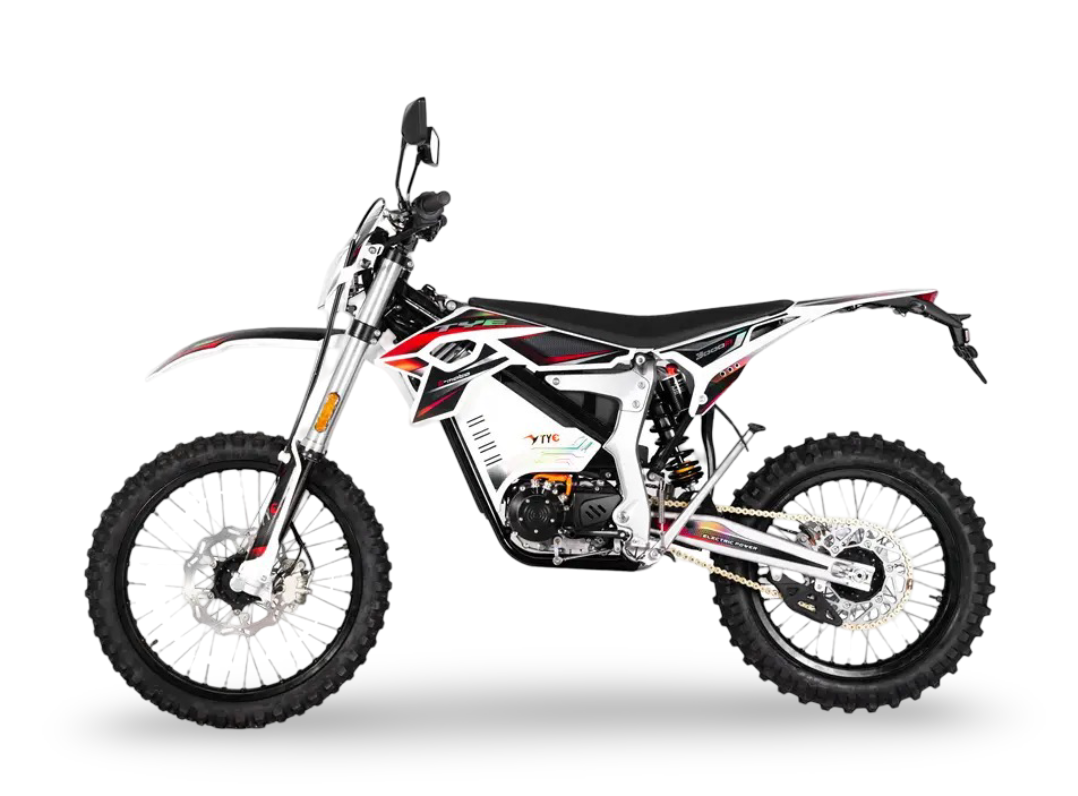
An electric enduro motorcycle is a battery-powered bike designed for off-road (“enduro”) riding on varied and challenging terrain. It combines the durability and suspension of a traditional enduro bike with an electric powertrain.
- Key Characteristics:
- Long-Travel Suspension: Typically 10+ inches of travel to absorb big bumps, jumps, and rocks.
- Knobby Tires: Aggressive tread patterns for maximum grip in dirt, mud, and sand.
- Lightweight Frame: Agile handling is critical for technical trails.
- Electric Motor: Instant torque, zero emissions, and near-silent operation.
- No Gearbox: Single-speed operation simplifies riding—just twist and go.
Chapter 2: The Unbeatable Advantages of Going Electric
Why are riders making the switch? The benefits are profound.
- Instant Torque: The #1 advantage. 100% of torque is available from 0 RPM, providing explosive acceleration out of corners and up steep hills that can embarrass more powerful gas bikes.
- Silent Operation: Ride without disturbing wildlife, neighbors, or other trail users. This “stealth” mode can also provide access to trails that are sensitive to noise.
- Minimal Maintenance: No engine oil, air filters, spark plugs, or clutch cables to replace. Say goodbye to complex top-end rebuilds and carburetor jetting.
- Lower Running Costs: “Refueling” costs are a fraction of gasoline. Electricity is cheaper, and there are far fewer moving parts to wear out or replace.
- Rider-Friendly: The simplicity of no gears lowers the barrier to entry, allowing riders to focus entirely on balance and line choice. The low center of gravity from bottom-mounted batteries enhances handling.
Chapter 3: Key Features to Understand
Before buying, you need to speak the language.
- Motor Power (kW): Unlike gas bikes (measured in cc), electric motors are rated in kilowatts (kW).
- 5-10 kW: Entry-level / mid-range (e.g., Sur-Ron Light Bee X, Talaria Sting R). Great for trails and technical riding.
- 15-25 kW: High Performance (e.g., Kuberg Ranger, some custom-built bikes). Comparable to a 250cc gas bike.
- 60+ kW: Race & Championship Level (e.g., Stark VARG). Outperforms a 450cc motocross bike.
- Battery (Voltage & Capacity):
- Voltage (V): Think of this as the “pressure” of the electrical system. Higher voltage (e.g., 72V, 800V) often means higher potential performance and efficiency.
- Capacity (Ah or kWh): This is the “fuel tank.” A higher Amp-hour (Ah) or kilowatt-hour (kWh) rating means a longer range.
- Range: The million-dollar question. Range varies wildly based on riding style, terrain, and rider weight.
- Typical Range: 1-2 hours of aggressive trail riding, or 20-50 miles. For technical, slow-speed enduro, you can often get longer than you think.
- Charging Time: Most bikes charge on a standard wall outlet in 2-6 hours. Fast chargers can cut this time significantly.
- Weight: A critical factor for enduro. Electric enduro bikes range from ~110 lbs (50 kg) for light models to ~300 lbs (136 kg) for heavier street-legal “adventure” models.
Chapter 4: Top Brands & Models to Know (as of 2024)
- The Performance Pioneer: Stark VARG
- The bike that shook the industry. It features an unbelievable 80 hp, adjustable power from 15-80 hp, and virtual gearing to mimic different engine characteristics. It’s a top-tier race bike.
- The Trail Icons: Sur-Ron Light Bee X & Talaria Sting R
- These are the accessible, highly modifiable bikes that built the modern light e-enduro category. Incredibly popular for their low weight, agility, and huge aftermarket support. Often called “gateway drugs” to the electric world.
- The Established Player: Zero FX/FXE
- A street-legal (in many regions) dual-sport with an enduro spirit. Heavier than a pure enduro bike but offers superior range and the ability to connect trail networks via public roads.
- The Premium Innovators: Cake & Kuberg
- Cake: Swedish design-focused bikes (like the Kalk&) known for their minimalist aesthetic, lightweight, and premium components.
- Kuberg: Specializes in high-performance electric youth and adult bikes, with a strong focus on hard-enduro and extreme riding.
Chapter 5: The Buyer’s Guide: What to Consider
- Your Riding Style: Are you a hard enduro rider, a fast trail rider, or do you need to connect trails via roads? This dictates power, weight, and legality.
- Skill Level: Beginners will benefit from the manageable, linear power of lower-kW bikes. Experts will crave the top-tier performance of a Stark VARG.
- Budget:
- Entry-Level (Sur-Ron/Talaria): $4,000 – $5,500
- Mid-Range (Kuberg, higher-spec builds): $6,000 – $10,000
- High-Performance (Stark VARG, Cake): $12,000+
- Local Laws & Regulations: This is crucial. Many pure off-road e-enduros are not street-legal. If you need to ride on roads, you must look for a model with lights, signals, and a VIN that complies with your local DMV regulations.
- Dealer & Support Network: Consider the availability of parts, service, and warranty support in your region.
Chapter 6: Overcoming Common Concerns
- “The range isn’t enough for me.”
- Solution: For most single-track enduro rides, 2 hours is plenty. For longer adventures, plan your route around a charging point (a café, your car) or investigate portable charging solutions. Range is improving every year.
- “It’s too quiet; I’m worried about being seen.”
- Solution: This is a valid safety concern, especially on mixed-use trails. Use a bell or your voice to alert others. Wear high-visibility gear.
- “The initial cost is high.”
- Solution: While the upfront cost is often higher, calculate the Total Cost of Ownership. Savings on gas, oil, filters, and major engine repairs can make an electric bike cheaper over a 2-3 year period.
Chapter 7: The Riding Experience & Tips
Riding an electric enduro is a different skill.
- Braking: Engine braking is minimal. You must rely more on your physical brakes. Use the rear brake to control speed in corners.
- Throttle Control: Instant torque means jerky throttle inputs will upset the bike. Smooth is fast.
- Line Choice: The silent operation allows you to hear the bike working—the tires digging in, the suspension moving. This feedback can make you a better, more precise rider.
- Practice: The lack of gears and clutch removes a layer of complexity, allowing you to practice balance, body position, and throttle control more effectively.
Conclusion:
The electric enduro motorcycle is not the future—it’s the present. It offers a purer, simpler, and in many ways, more capable form of off-road riding. By understanding the technology, the market, and your own needs, you can confidently join the silent revolution and experience the thrill of instant, torque-filled power on the trail.
