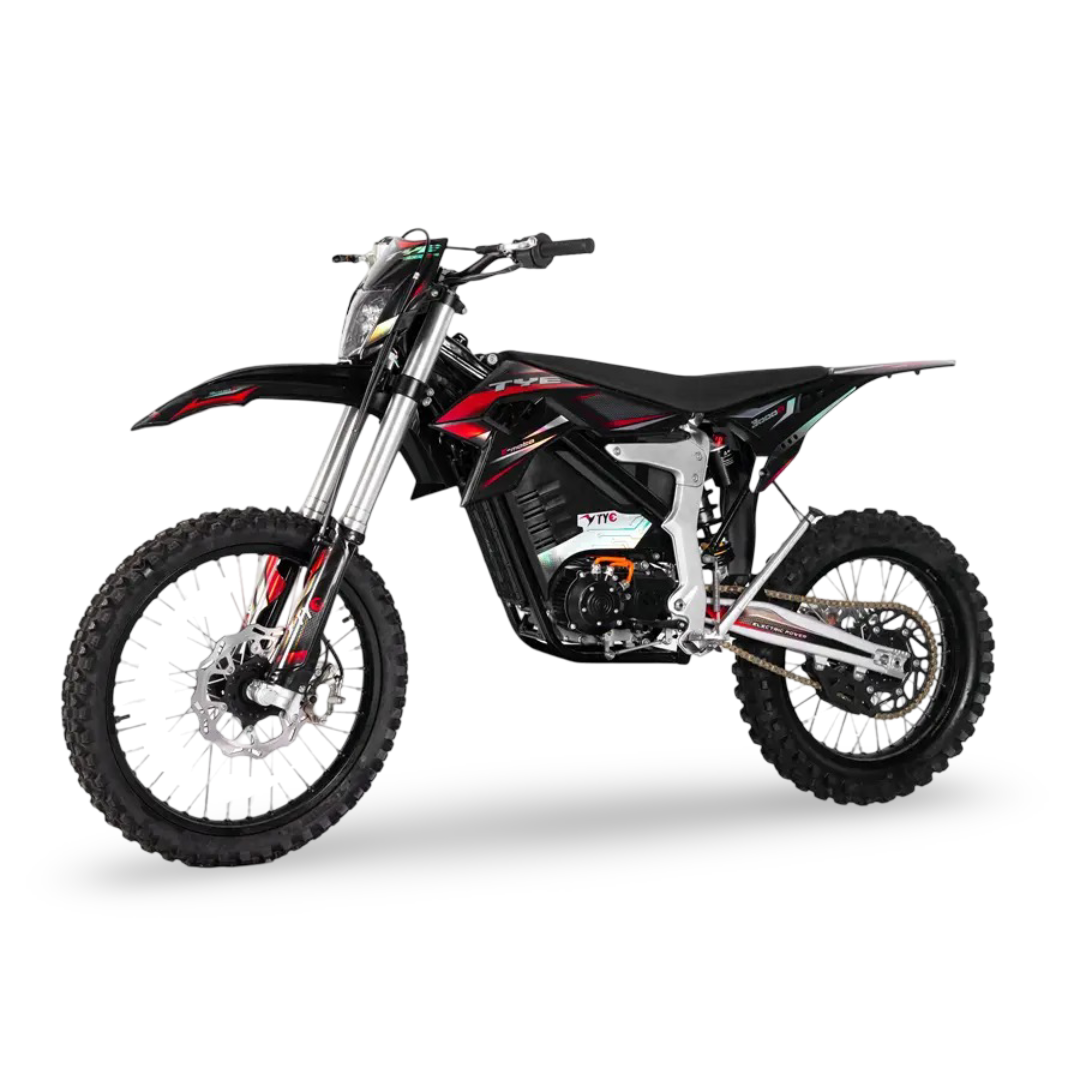
The scent of pine needles, the crunch of gravel underfoot, the distant call of a bird—these are the sounds of the wilderness, sounds that are about to be joined by a new, futuristic hum. The world of enduro riding is undergoing a silent revolution. The two-stroke scream and four-stroke thump that once defined the sport are being challenged by the instantaneous, torque-rich whisper of electric power.
Buying an electric enduro bike isn’t just a purchase; it’s a step into the future of motorcycling. It’s a decision that promises less maintenance, more accessibility, and a profoundly different connection with both your machine and your environment. But navigating this new landscape can be daunting. This ultimate guide is designed to be your compass, walking you through every consideration to ensure you choose the perfect electric steed for your off-road adventures.
Chapter 1: The Electric Advantage – Why Go Electric for Enduro?
Before we dive into specs and models, let’s solidify the “why.” The benefits of electric power for enduro riding are not just marginal; they are, in many cases, transformative.
- Instantaneous Torque and Power Delivery: This is the game-changer. Electric motors deliver 100% of their torque from 0 RPM. This means instant, controllable, and immense power the moment you twist the throttle. No more clutching to keep the engine in the powerband. Hill climbs become less about momentum and more about precise throttle control. Exiting corners is explosive and effortless.
- The Sound of Silence: The noise advantage is twofold. First, it allows you to ride in areas previously off-limits due to sound restrictions, opening up a world of trails closer to home. Second, it enhances the riding experience. You hear the bike working—the whine of the motor, the suspension compressing—and you’re more connected to the natural world around you. It’s a more immersive, almost meditative way to ride.
- Radically Simplified Maintenance: Forget about oil changes, air filters, spark plugs, coolant, valve adjustments, and complex engine rebuilds. An electric motorcycle has far fewer moving parts. The primary maintenance items are the chain, sprockets, brakes, and suspension—just like a traditional bike, but without the oily, grimy engine work.
- Lightweight and Centralized Mass: While the battery pack is heavy, its placement is typically very low and central in the frame. This creates an incredibly low center of gravity, making the bike feel much lighter and more nimble than its stated weight might suggest. It’s easier to flick from side to side, pick up after a fall, and maintain balance at slow speeds.
- Rideability and Control: The combination of instant torque, no gears, and a low CG makes for a bike that is incredibly easy to ride, especially for beginners. It eliminates the fear of stalling and simplifies the learning curve. For experts, it offers a new level of precision and control.
Chapter 2: Decoding the Spec Sheet – What Really Matters
Understanding the specifications of an electric motorcycle is different from a gas bike. Here’s what to look for:
1. Battery & Range: The Heart of the Matter
This is the most critical and often misunderstood aspect.
- Capacity (kWh): Think of this as the size of your fuel tank. A larger kWh number means more energy stored and, generally, more range. For serious enduro riding, look for bikes with at least 5 kWh, with 8-10+ kWh being ideal for longer days.
- Voltage (V): The system’s pressure. Higher voltage (e.g., 800V vs. 400V) often allows for more efficient power transfer and faster charging, but it’s a secondary consideration to capacity for most riders.
- Range: This is the big question. Manufacturer claims are often based on ideal, slow-speed trail riding. Real-world range is highly variable and depends on:
- Riding Style: Aggressive, high-speed riding can halve the estimated range.
- Terrain: Deep sand, mud, and steep hills are energy vampires.
- Rider Weight: More weight requires more energy to move.
- Ambient Temperature: Cold weather reduces battery performance.
- A Realistic Rule of Thumb: For aggressive single-track and enduro riding, plan for a range of 1.5 to 2 miles per kWh. So, a 5 kWh battery might get you 7-10 miles of hard riding, while a 10 kWh battery could get 15-20 miles.
2. Motor & Power: The Muscle
- Peak Power (kW/hp): This is the maximum power the motor can produce, usually for short bursts. This figure determines your top speed and high-speed acceleration.
- Continuous Power (kW/hp): This is the power the motor can sustain indefinitely without overheating. This is arguably more important for enduro, as it determines your ability to chug up long, technical climbs without the motor cutting back (thermal throttling).
- Torque (Nm/lb-ft): This is the rotational force. Electric motors have loads of it, instantly. More torque means better acceleration and climbing ability.
3. Charging: Refueling Your Ride
- Charger Included: Most bikes come with a standard Level 1 (household outlet) charger.
- Charging Time: This depends on the battery size and the charger’s power. A standard 1.5 kW charger might take 4-6 hours for a full charge, while an optional 3 kW or 6 kW “fast charger” can cut that to 1.5-3 hours.
- Portability: Can you easily remove the battery to charge it elsewhere? This is a huge plus for those without a garage or for taking the battery to a hotel room.
- Swappable Batteries: Some brands, like KTM with its FREERIDE E-XC, offer optional second batteries. This is the electric equivalent of carrying extra fuel cans and can double your range instantly.
4. Chassis, Suspension & Ergonomics: The Bike’s Backbone
This is where electric and gas bikes are most similar. Don’t neglect these critical components for flashy electric specs.
- Frame & Swingarm: Look for robust, well-designed aluminum or chromoly steel frames.
- Suspension Travel & Quality: For true enduro, you need at least 300mm (11.8 inches) of quality, adjustable suspension front and rear. Brands like WP, Öhlins, Fox, and Showa are indicators of a serious off-road machine.
- Weight: This is a key figure. While the low CG helps, a lighter bike is always easier to manhandle. Current electric enduro bikes range from around 240 lbs (109 kg) for lightweights to over 300 lbs (136 kg) for more powerful, long-range models.
- Seat Height & Ergonomics: Ensure the bike fits you. The riding position should feel natural and allow you to move around easily.
5. Riding Modes & Technology
- Riding Modes: Most e-bikes offer selectable power maps (e.g., Eco, Rain, Sport, Rocket). These are crucial for managing battery consumption and tailoring power delivery to the terrain.
- Regenerative Braking: This uses the motor as a generator to slow the bike and put a small amount of energy back into the battery. Its effect on range in off-road conditions is minimal, but it can provide significant engine braking, which is useful in certain situations.
- App Connectivity: Some bikes offer smartphone apps to monitor battery status, track rides, and adjust power settings.
Chapter 3: The Contenders – A Look at the Current Landscape
The market is evolving rapidly, but here are the key players and categories as of today:
The Lightweight Technical Torque Masters:
- Sur-Ron Light Bee X / Storm Bee: The Sur-Ron is the phenomenon that brought high-performance electric dirt biking to the masses. The Light Bee is incredibly light, nimble, and punchy, blurring the line between a powerful e-bike and a lightweight motorcycle. The newer Storm Bee is more powerful and motorcycle-like. They offer incredible value but may require modifications for serious riders and are not always street-legal.
- Talaria Sting R / MX4: Direct competitors to the Sur-Ron, offering similar performance, weight, and value propositions. The competition between these brands is fierce, driving constant innovation.
The Purpose-Built Enduro Weapons:
- KTM FREERIDE E-XC: One of the first major OEM entries. It’s lightweight, has high-quality WP suspension, and handles like a true enduro bike. Its range is limited, but the optional swappable battery system is a brilliant solution.
- GasGas EC-E 5: Essentially a KTM FREERIDE in red. Shares the same platform, strengths, and limitations.
- Cake Kalk&: A premium, minimalist, and design-focused Swedish machine. It’s incredibly light and offers a pure, unadulterated riding experience, but it comes at a high price and with a focus on simplicity over long-range touring.
The High-Performance, Long-Range Innovators:
- Stark VARG: The bike that sent shockwaves through the industry. The VARG boasts staggering power (80 hp), a competitive weight of under 300 lbs, and a massive 6 kWh battery promising significant range. Its party trick is an app that allows you to digitally mimic the power delivery of over 100 different gas bikes. It represents the current peak of electric enduro performance.
- Zero FX/FXE: Zero is a pioneer in electric motorcycles. The FX platform is their dual-sport/enduro model. It’s more street-oriented than a pure enduro bike but offers decent power, a proven platform, and optional larger batteries. The suspension and chassis are less focused on hardcore enduro than the Stark or KTMs.
The Emerging Players:
- Ultraviolette F77: While more streetfighter than enduro, its technology is worth watching.
- New Brands Constantly Emerging: The space is dynamic, with new crowd-funded and startup brands appearing regularly. Always do deep due diligence on their ability to deliver, provide parts, and offer support.
Chapter 4: The Crucial Considerations – Beyond the Brochure
The Price of Admission:
Electric enduro bikes are not cheap. You are paying for cutting-edge technology. Prices can range from ~$4,500 for a Sur-Ron to over $12,000 for a Stark VARG or a high-spec KTM. Remember to factor in the cost of safety gear, a high-quality charger, and any potential upgrades.
The “But Can I Plate It?” Question (Street Legality):
This is a complex and region-specific issue.
- Purpose-Built Dirt Bikes: Models like the Stark VARG are sold as competition-only vehicles.
- Dual-Sport Models: Bikes like the Zero FXE are designed from the start to be street-legal.
- The Gray Area: Some riders successfully plate bikes like the Sur-Ron or KTM FREERIDE in certain jurisdictions, but this is becoming increasingly difficult. Your absolute first step should be to check your local DMV/DOT regulations. Don’t assume you can make a dirt bike street-legal.
The Support Network: Dealer vs. Direct-to-Consumer
- Traditional OEMs (KTM, GasGas): You get the benefit of an established dealer network for service, warranty work, and parts.
- Direct-to-Consumer (Stark, Sur-Ron): You buy online, which often means a lower price. However, you must rely on the company’s customer service, their ability to ship parts, and potentially your own mechanical skills or a local mechanic willing to work on it.
The Sound of Safety:
The silence is a blessing and a curse. Other trail users (hikers, mountain bikers, horse riders) won’t hear you coming. It is your responsibility to ride even more cautiously, use a bicycle bell or polite vocal call, and slow down when approaching blind corners. Being an ambassador for the technology is key to maintaining trail access.
Chapter 5: The Test “Ride” – Your Personal Checklist
You can’t just listen for engine noise. Here’s what to focus on when you evaluate a bike:
- Ergonomics: Does it feel narrow? Can you grip the bike with your knees? Is the seat height manageable?
- Throttle Response: Is it smooth and predictable, or is it twitchy and abrupt at low speeds? This is critical for technical terrain.
- Handling: Flick the bike side-to-side. Does it feel top-heavy or planted with a low CG?
- Suspension Action: Push down on the forks and shock. Do they feel smooth and controlled?
- Brake Feel: Check the power and modulation of the brakes. Many e-bikes use high-quality components.
- User Interface: Are the controls and display intuitive and easy to read while riding?
Chapter 6: The Verdict – Is an Electric Enduro Right for You?
An electric enduro bike is PERFECT for you if:
- You ride in noise-sensitive areas.
- You value low maintenance and simplicity.
- You primarily ride technical, twisty single-track where instant torque is a huge advantage.
- You have a place to charge it easily (a garage, shed, etc.).
- You are either a beginner who would benefit from the lack of gears and stalling, or an expert looking for a new, precise tool.
You might want to STICK WITH GAS for now if:
- You regularly embark on 80+ mile backcountry adventures where charging is impossible.
- Your budget is limited, and the used gas bike market is your primary target.
- The visceral sound and smell of a combustion engine are a non-negotiable part of the experience for you.
- You are uncomfortable being an early adopter and rely on a vast, established network of parts and mechanics.
Conclusion: The Future is Now, and It’s Quiet
The electric enduro motorcycle is no longer a prototype or a novelty. It is a viable, thrilling, and in many ways superior option for a specific type of off-road riding. It demands a shift in thinking—from range anxiety to ride planning, from engine maintenance to battery management.
The choice to go electric is a choice for a cleaner, quieter, and more accessible form of trail riding. It’s a choice for mind-bending torque and a rekindled connection with the outdoors. Do your homework, manage your expectations on range, and if you have the opportunity, take a test ride. That first instant, silent surge of power as you carve through a wooded trail is a feeling that is not just different, but for many, profoundly better. The revolution won’t be loud; it will be a whisper. And it’s waiting for you.
