
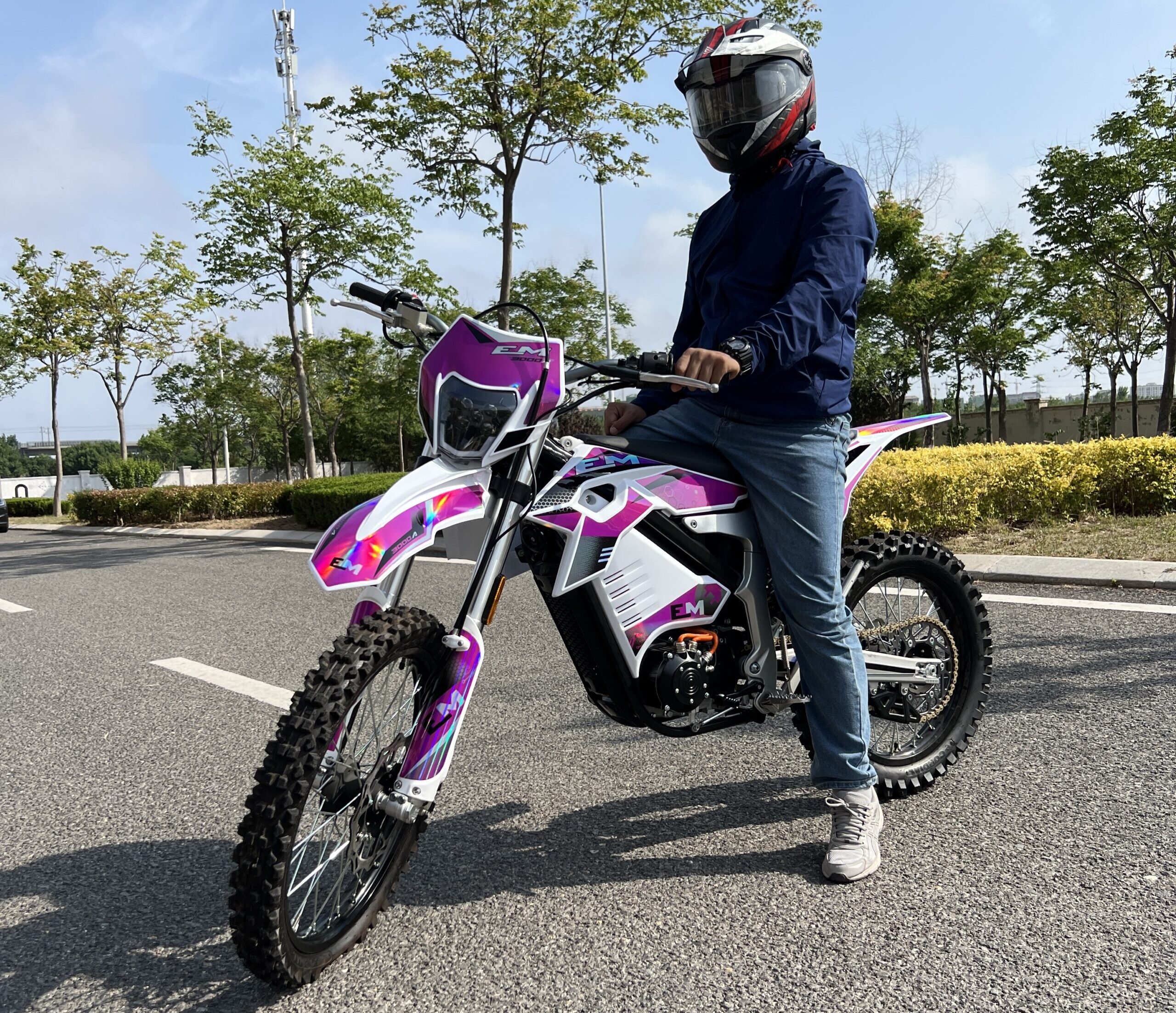
For generations, the iconic snarl of a gasoline-powered engine has been the soundtrack of off-road adventure. It’s a sound synonymous with power, adrenaline, and the raw thrill of conquering untamed terrain. But what if that soundtrack has been, all along, the very thing limiting our access to the wilderness we seek? What if the key to unlocking a deeper, more expansive, and more sustainable connection with nature wasn’t a louder pipe, but a silent one?
Welcome to the quiet revolution of the electric dirt bike. This isn’t just a swap of a gas tank for a battery; it’s a paradigm shift. It’s a redefinition of what it means to explore, offering a newfound freedom that is changing the relationship between riders, trails, and the natural world.
The Sound of Limitations: The Gasoline Precedent
To understand the freedom of electric, we must first acknowledge the constraints of internal combustion.
1. The Noise Barrier:
The most obvious limitation is noise. A typical gas-powered dirt bike can produce between 80 to 110 decibels, a roar that can be heard for miles. This sonic footprint has tangible consequences:
- Trail Closures: Noise pollution is the single biggest complaint from non-riding recreational users—hikers, mountain bikers, horse riders—and nearby landowners. This persistent conflict has led to the systematic closure of countless trails and riding areas across the globe. Land managers, faced with competing interests, often see the loudest activity as the most disruptive, leading to restricted access for dirt bikes.
- The “Us vs. Them” Dynamic: The noise creates an invisible wall. It announces your presence long before you arrive, often causing tension and preemptive annoyance. It prevents any element of stealth or subtlety, forever marking you as an intruder in a peaceful landscape.
2. The Environmental Perception:
Beyond the noise, gas bikes have an environmental perception problem. There are emissions—however small from a single bike—the risk of fluid leaks (fuel, oil, coolant), and the visible plume of two-stroke smoke. This reinforces the image of dirt biking as a “dirty” activity, further fueling arguments for trail restrictions.
3. The Riding Experience Itself:
Even for the rider, the gas engine dictates the experience. The power band is narrow, often requiring constant clutch work to stay in the sweet spot. The engine braking is pronounced, and the machine vibrates with a constant, fatiguing frequency. You are, in many ways, managing the engine as much as you are riding the trail.
The Electric Whisper: A Key to Unlocked Gates
Enter the electric dirt bike. At its core, it replaces the complex symphony of pistons, valves, and exhaust with a simple, powerful electric motor. The difference is not just incremental; it’s transformative.
1. The Decibel Revolution:
The most profound change is the sound, or the lack thereof. An electric dirt bike in operation produces around 75-85 decibels, but this is mostly the sound of the knobby tires biting into the dirt and the whir of the chain and gears. The motor itself is nearly silent.
This quietness is a superpower. It allows you to:
- Ride Closer to Home: Imagine practicing your technique in a vacant lot or a friendly farmer’s field without alerting the entire neighborhood. The electric bike makes this possible, drastically increasing practice opportunities.
- Access “Off-Limits” Areas: Trails that were once too close to residential areas, or that had noise-restriction covenants, suddenly become viable. That small network of woods behind a suburb, previously inaccessible due to noise complaints, can now be explored respectfully.
- De-escalate Land-Use Conflicts: When you approach a group of hikers or horse riders, they aren’t startled by a sudden engine roar. You can slow to a respectful crawl, exchange a quiet greeting, and pass without shattering the peace. This changes the entire dynamic from one of intrusion to one of shared space.
2. The Mechanical and Environmental Advantage:
The environmental argument for electric is powerful. With zero tailpipe emissions, you are not contributing to local air pollution. There is no risk of spilling gasoline or oil into a stream or onto the trail. This “Leave No Trace” ethic is inherently stronger, providing a compelling counter-argument to those who would seek to close trails on environmental grounds.
From a mechanical standpoint, the simplicity is liberating. There is no carburetor to jet for altitude, no air filter to clean obsessively, no oil to change, and no spark plug to foul. Maintenance is reduced to checking the battery, keeping the chain lubricated, and basic suspension upkeep.
The New Riding Experience: Mastery and Connection
Beyond access, the electric dirt bike fundamentally changes the feel of riding. It’s not just a different machine; it’s a different sport.
1. Instant Torque and Linear Power:
Electric motors deliver 100% of their torque from zero RPM. This means instantaneous, explosive power the moment you twist the throttle. There is no clutch to slip, no need to build revs. This tractable power is a game-changer on technical terrain.
- Hill Climbs: You can crawl up a steep, rocky incline with precise, unwavering power, something that would often stall a gas bike or require frantic clutch modulation.
- Technical Sections: Navigating roots, rocks, and tight switchbacks becomes more intuitive. The power is delivered so linearly and predictably that you can focus entirely on your line and body position, not on managing the engine’s power band.
2. The Zen of Silence:
This is perhaps the most underrated aspect. Without the constant roar of an engine filling your helmet, your senses come alive. You hear the crunch of gravel under your tires, the birds singing in the trees, the wind rushing past. You become more aware of the terrain, the balance of the bike, and the rhythm of your breathing.
This heightened sensory input creates a deeper, more meditative connection with the environment. You are no longer just passing through nature; you are immersed in it. The ride becomes less about the machine and more about the journey itself.
3. Enhanced Learning and Skill Development:
For new riders, an electric bike is the ultimate teacher. The absence of a clutch and stalling removes a major point of frustration, allowing beginners to focus on the fundamentals: balance, vision, and throttle control. For experienced riders, the quiet and linear power allow for a finer honing of skills, particularly in slow, technical riding where finesse trumps brute force.
Addressing the Elephant in the Room: Range and Charging
The most common objection to electric dirt bikes is range anxiety. “How far can it go?” It’s a valid question, but one that requires context.
Modern performance electric dirt bikes like the Sur-Ron Light Bee, Talaria Sting, or high-end models from Cake and Zero Motorcycles offer a real-world range of 2-4 hours of aggressive trail riding, or 40-60 miles on mixed terrain. For the vast majority of single-track trail rides, this is more than sufficient.
Furthermore, the riding style adapts. You become more efficient, learning to carry momentum and use the bike’s phenomenal regenerative braking to recapture energy on descents. And the solution to longer adventures is simpler than you might think:
- Portable Chargers: A 2-3 hour charge from a standard wall outlet can often get you another 80% battery. Throwing a compact charger in a backpack means you can refuel at a trailhead cafe or a friend’s house.
- Swappable Batteries: Many models are moving towards swappable battery packs. For a truly epic all-day ride, carrying one or two spare batteries in a support vehicle is a lightweight and effective solution.
- Solar and Mobile Power: The off-grid community is rapidly innovating with portable solar panels and power stations, making remote charging a viable option for multi-day backcountry expeditions.
The point is not to replicate the 100-mile desert race capability of a gas bike with a large tank. The point is that for 90% of recreational trail riding, the range is adequate, and for the other 10%, solutions are emerging that align with the ethos of quieter, more mindful exploration.
The Future is Quiet: A Cultural Shift
The adoption of electric dirt biking is more than a technological trend; it’s a cultural shift. It represents a maturation of the sport, a move towards greater responsibility and sustainability.
1. The “Gateway Drug” to Riding:
The quiet and approachable nature of electric bikes is bringing new people into the sport. Parents are more comfortable buying an electric bike for their teens to ride nearby. Mountain bikers are discovering the thrill of amplified off-road travel without the intimidating complexity and noise of a gas bike. This influx of new riders is vital for the long-term health and growth of the sport.
2. A Tool for Trail Advocacy:
Electric dirt bike riders are becoming powerful advocates for trail access. They can attend land manager meetings and credibly argue that their activity is low-impact, quiet, and compatible with multi-use trails. This positions the riding community not as a problem, but as a partner in conservation and recreation.
3. The Evolution of Design:
Freed from the constraints of a cylinder head, gas tank, and exhaust, designers are reimagining what a dirt bike can be. We’re seeing lower centers of gravity, more flexible frame geometries, and innovative features that were previously impossible. The electric drivetrain is a canvas for creativity.
Conclusion: The Trail Less Heard
The freedom of a quiet electric dirt bike is not the freedom to be louder or faster than everyone else. It’s a more profound liberty. It is the freedom to explore places you couldn’t before. The freedom to ride more often, closer to home. The freedom to focus on the art of riding itself, without the mechanical distraction. The freedom to be a welcomed guest in the wilderness, not a noisy intruder.
It’s the sound of tires on dirt, the wind in the trees, and your own heartbeat. It’s the sound of a new trail opening up ahead of you, inviting you in. The revolution won’t be heard; it will be felt. And it’s waiting for you, just beyond the next silent, electric climb.
